
How Water Marbling Works
In the studio, fabric is prepared to receive pigment, and the water is conditioned to hold and support the movement of color.
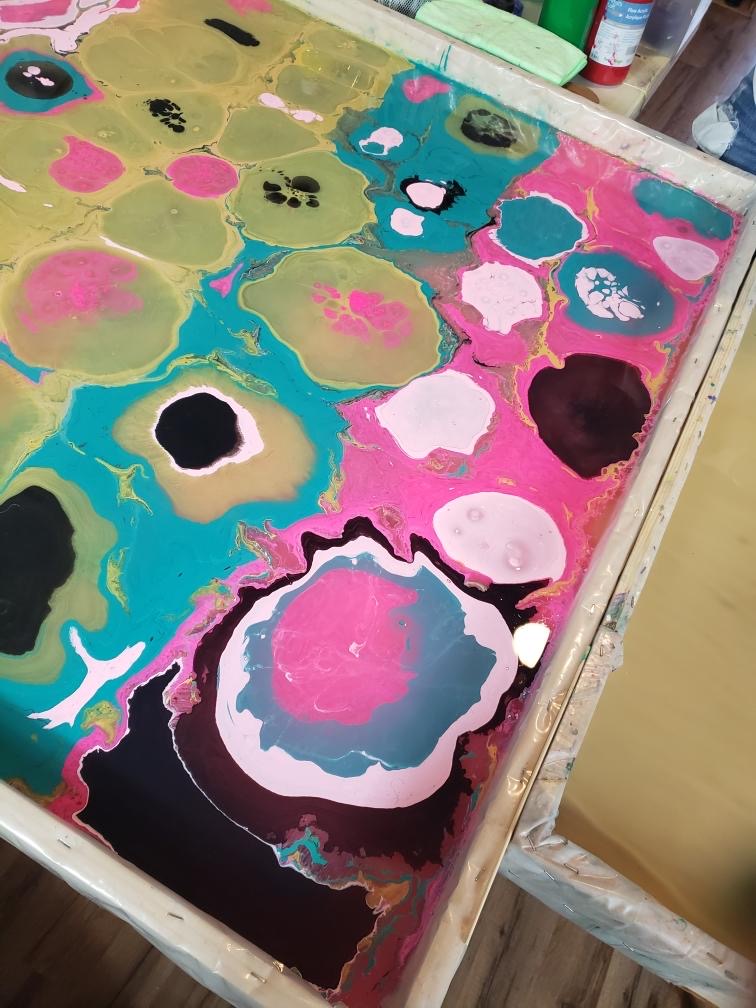
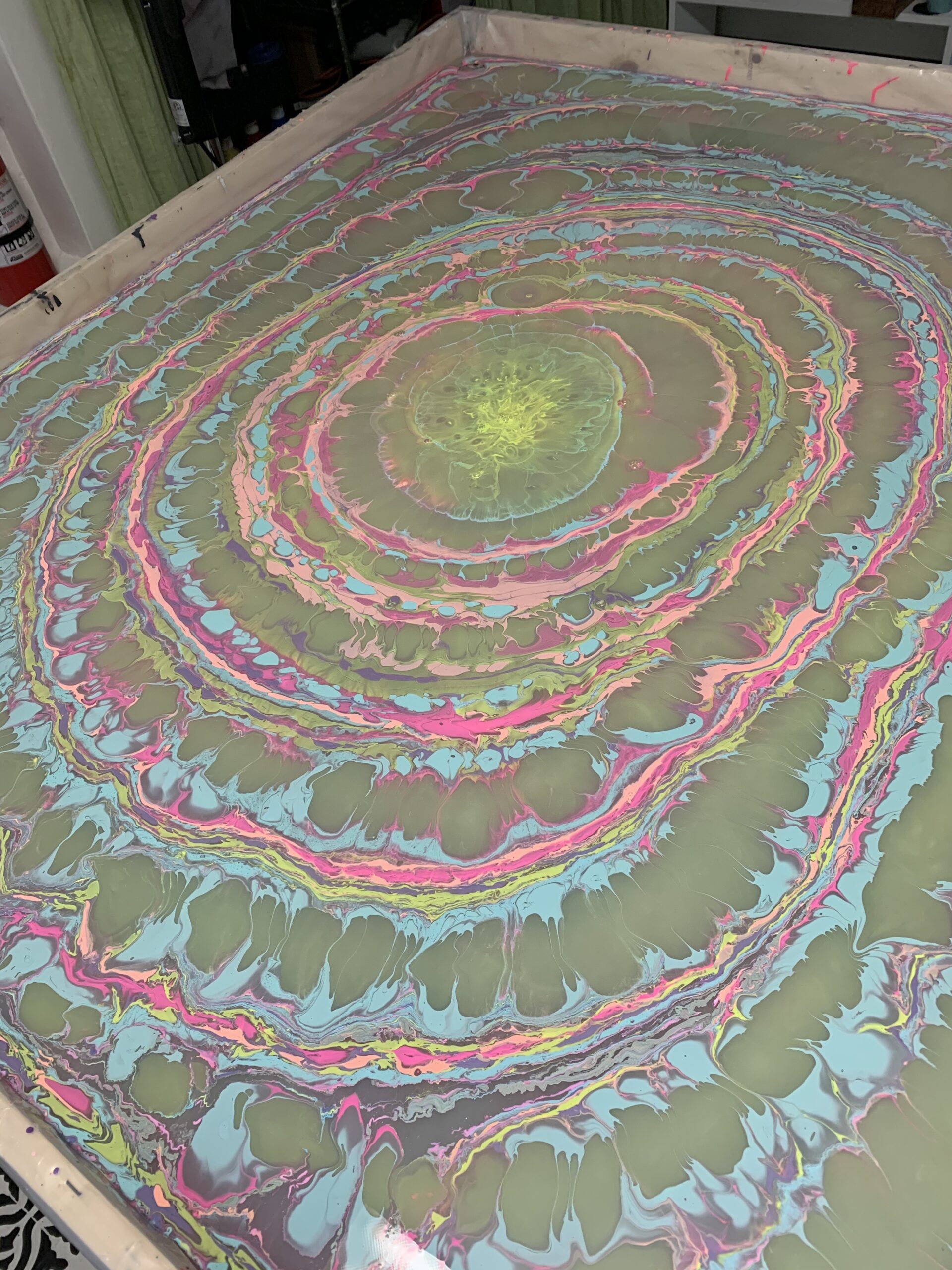
Then the acrylic is floated on the surface of the water. There are unlimited options when it comes to the design. You can leave the color to spread organically, layer the color in circles or rows and then using simple tools, you can rake the paint to create a pattern before you lay your fabric down. The moment of transfer is final. There is no revision, no duplication, only the decision to capture what exists in that exact second.
If you’re curious about the full process, you can explore the videos in The Making Of section where the creation of many of these textiles is documented.
Why Every Marbled Textile is Unique
Marbling has existed for centuries across cultures, from Turkish Ebru to Japanese Suminagashi, where it was used to create intricate papers for manuscripts and bookbinding.
In its contemporary form, the process has moved beyond paper into textile, where it takes on a different scale, presence and purpose. While the foundation remains the same, pigment suspended on water and transferred in a single moment. The outcome is no longer decorative, it becomes structural, atmospheric and spatial.
Each textile is revealed through the interaction of movement, timing and control. The result is a surface that cannot be replicated, only captured.
Water Marbling: A Living Surface
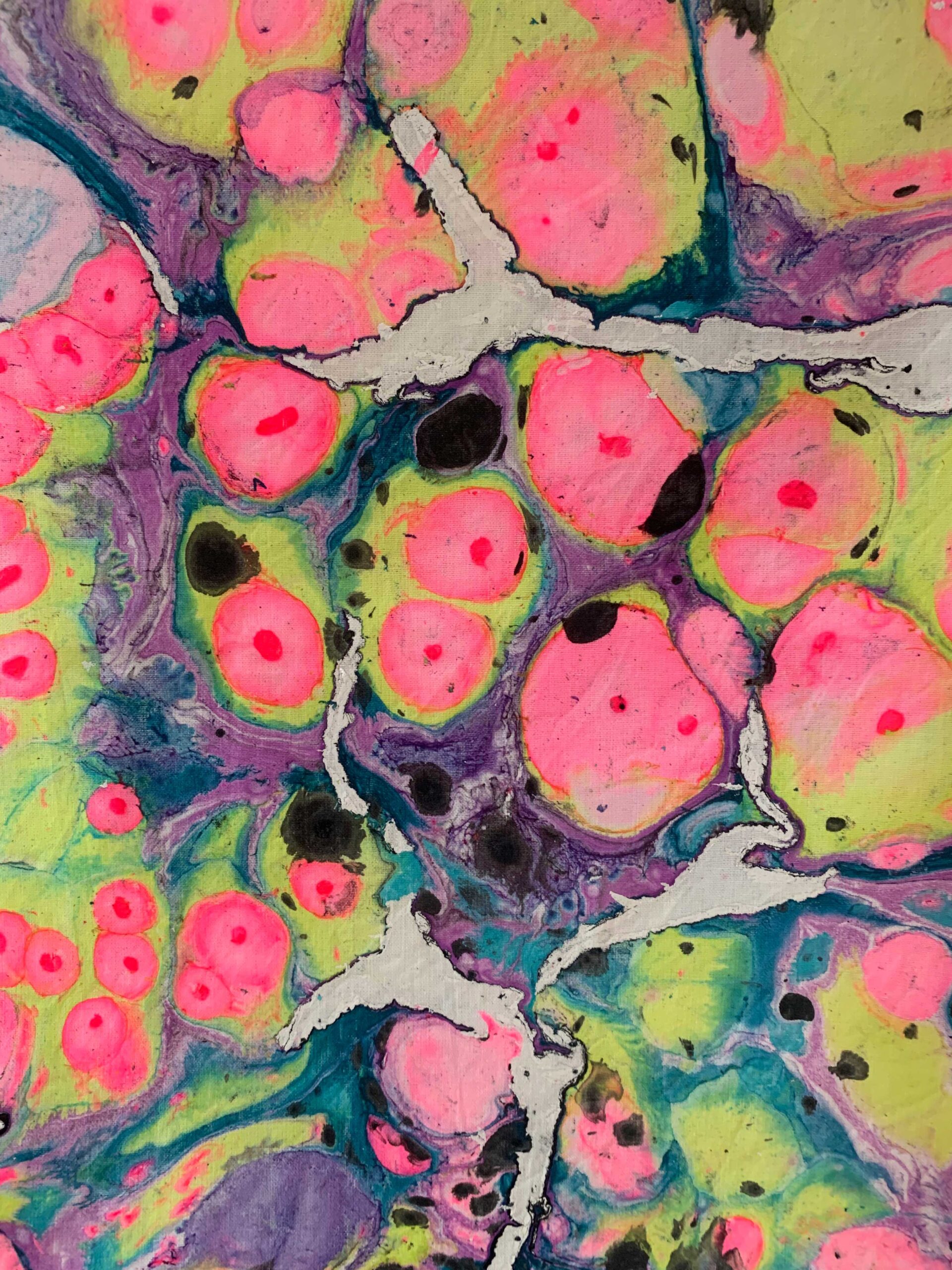
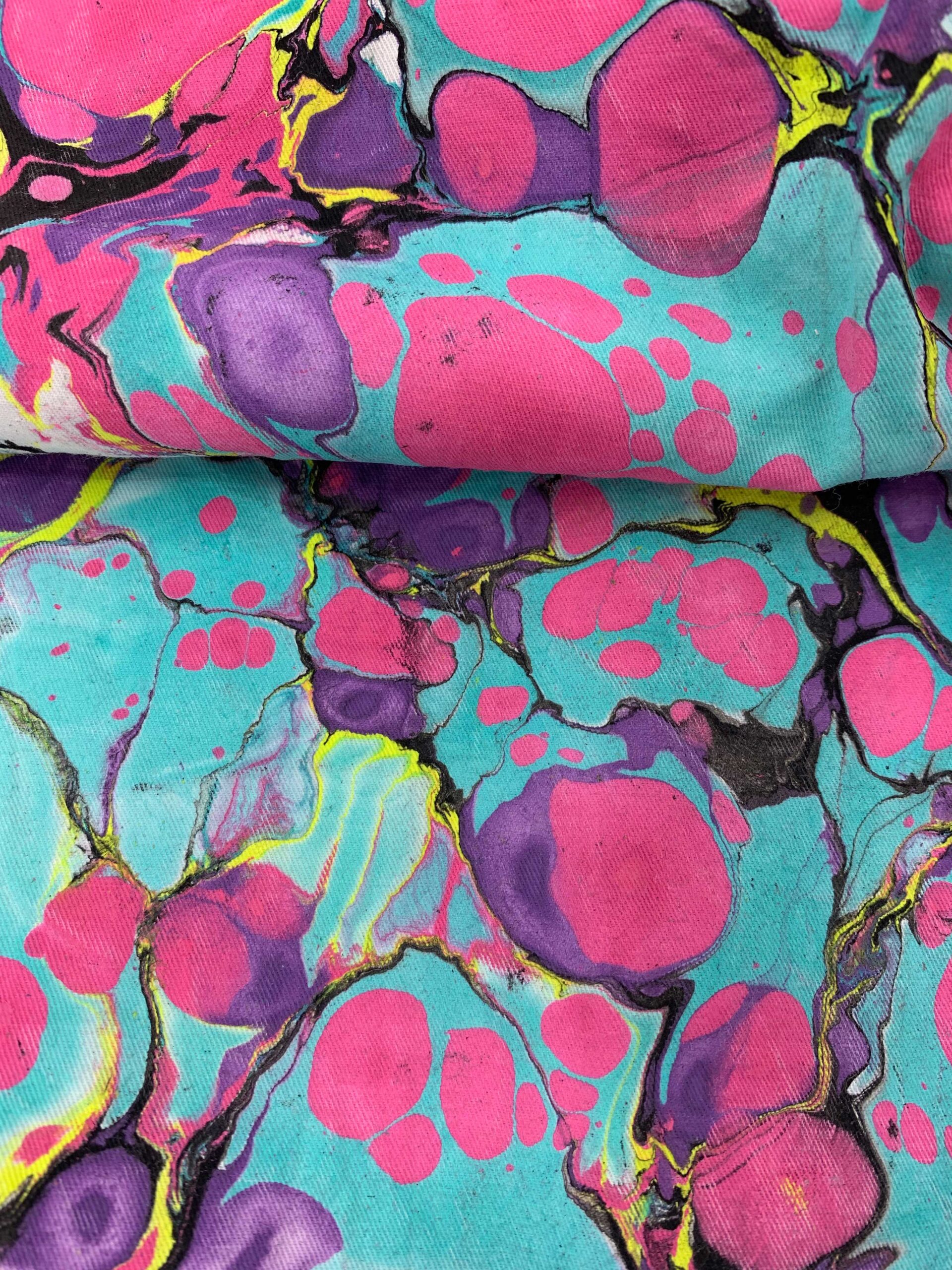
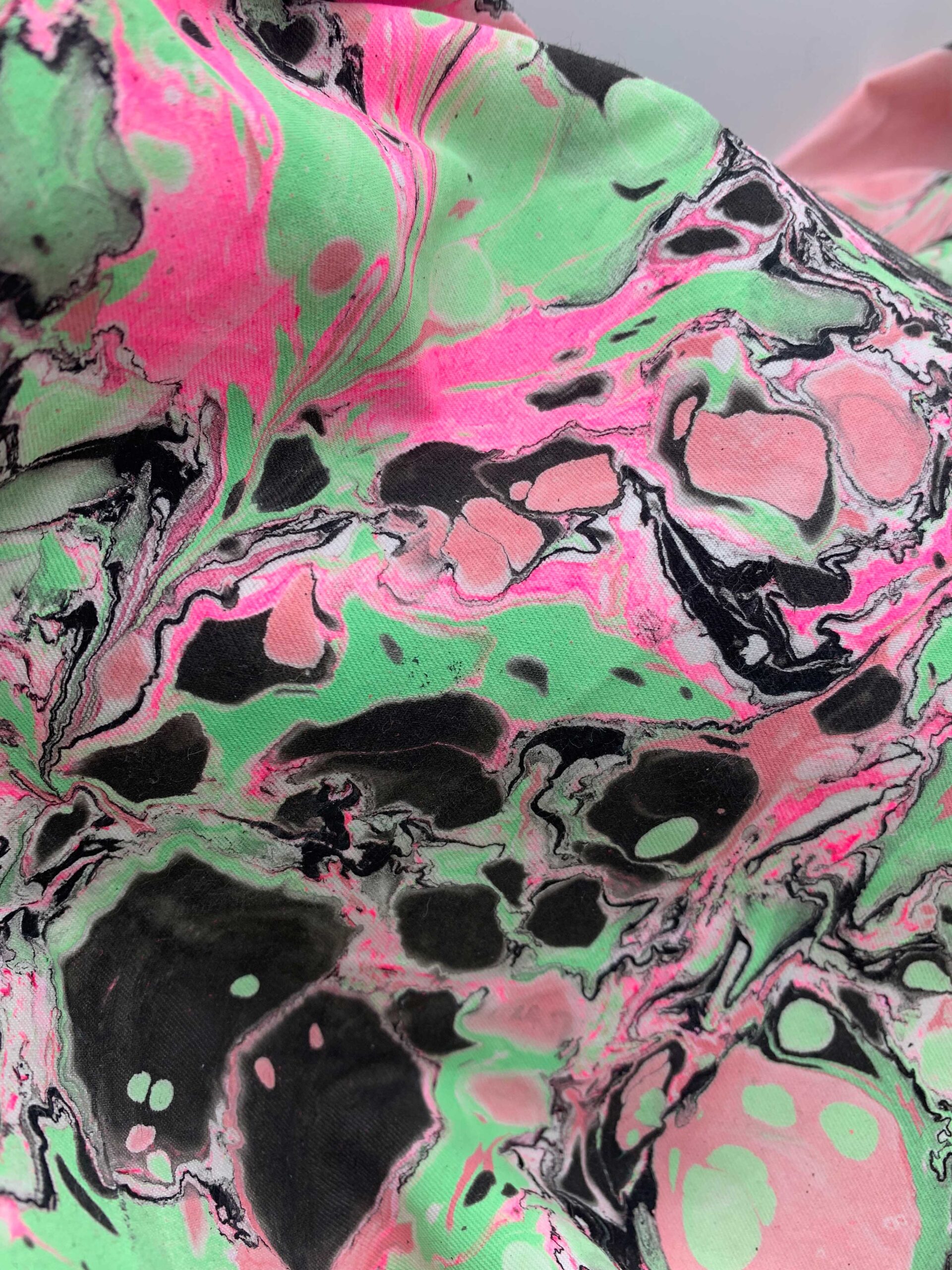
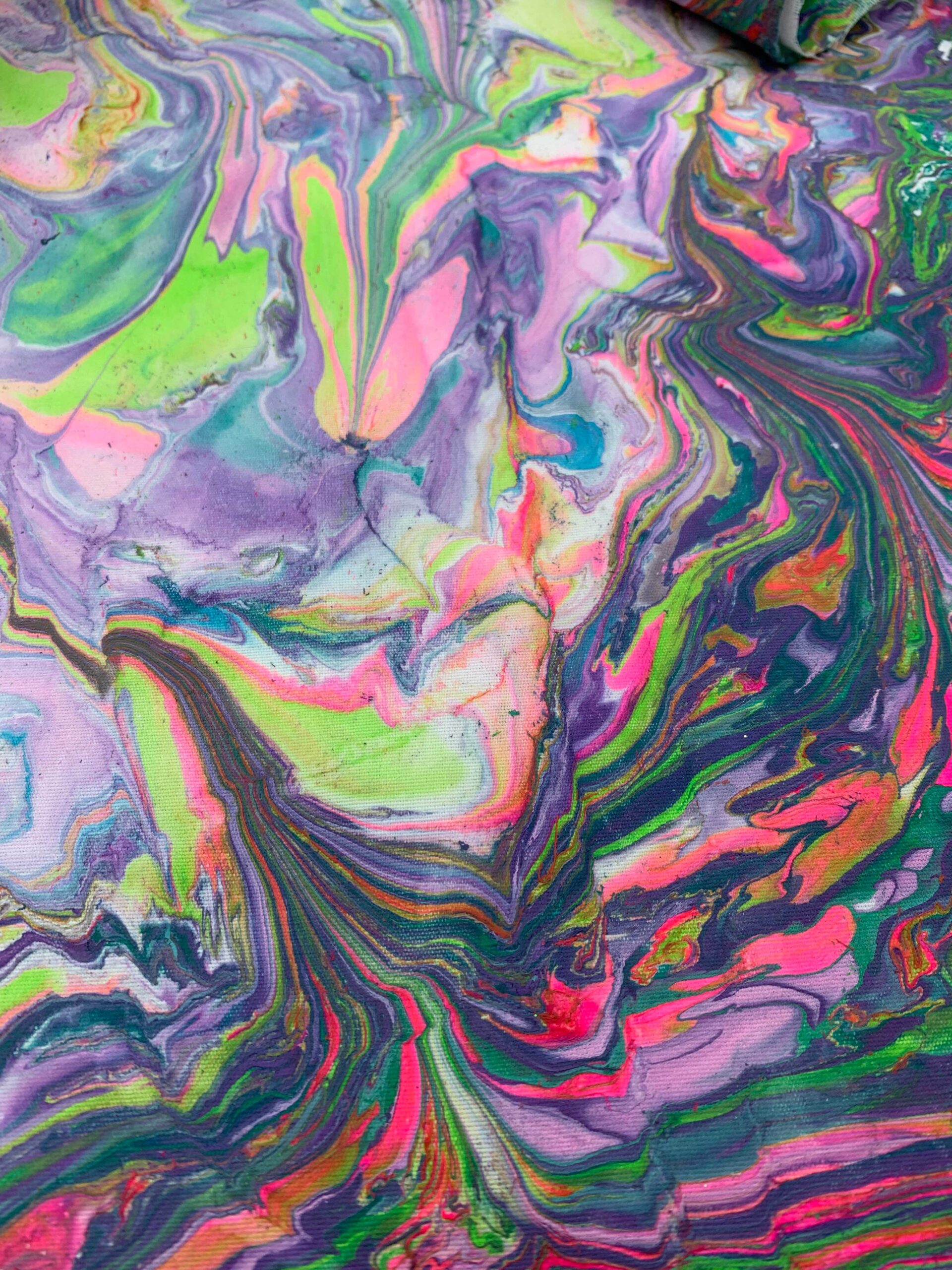
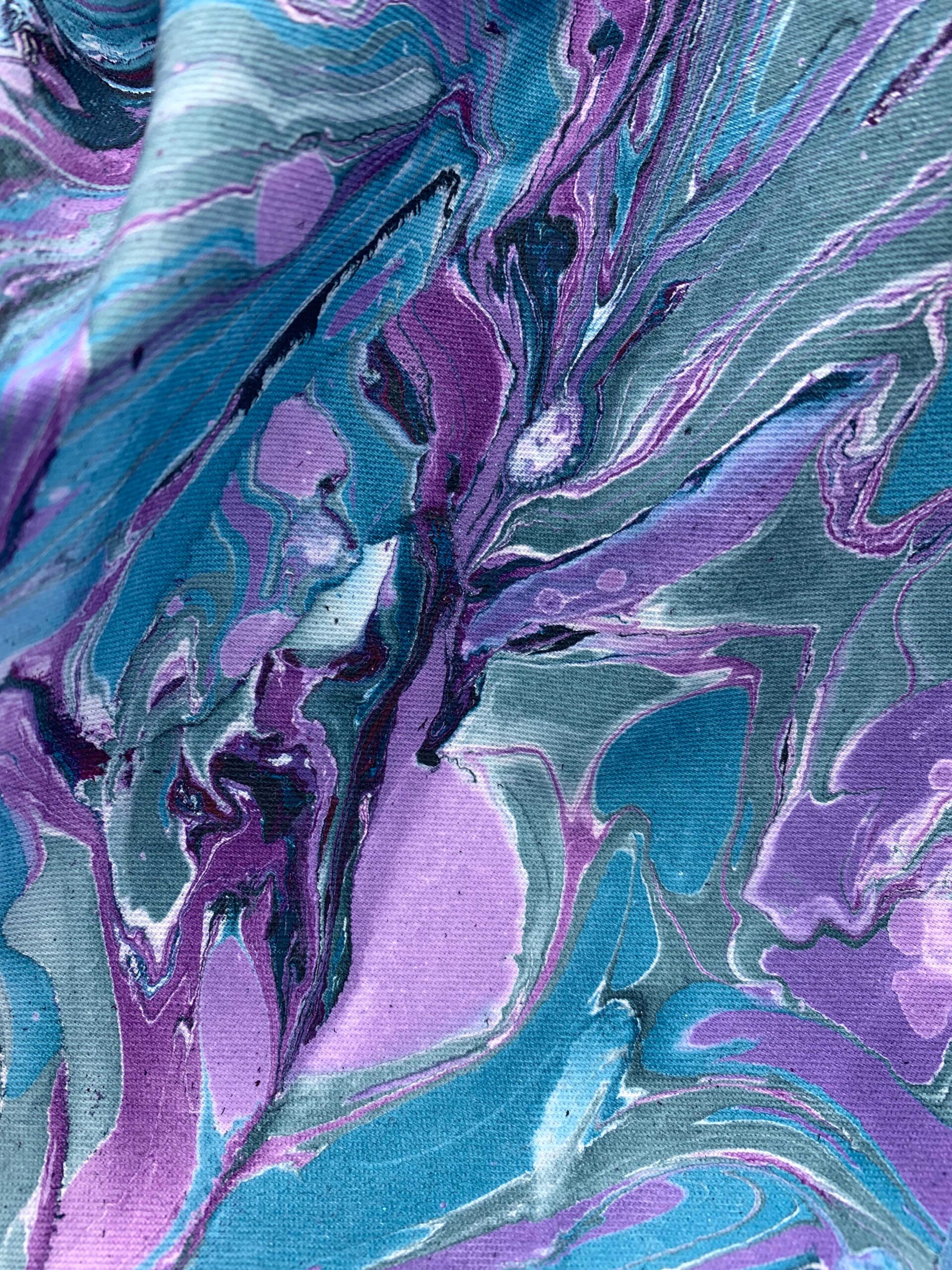
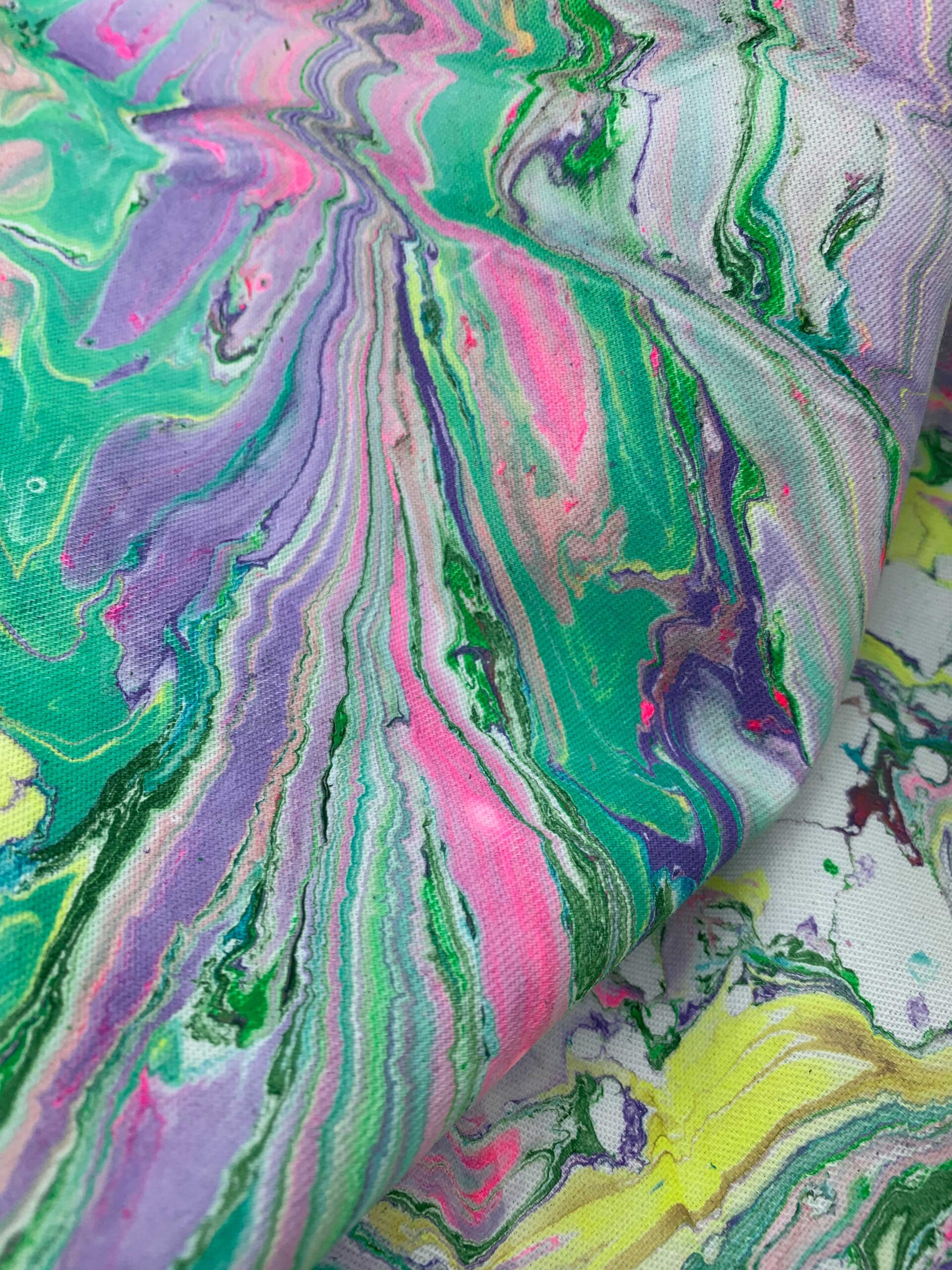
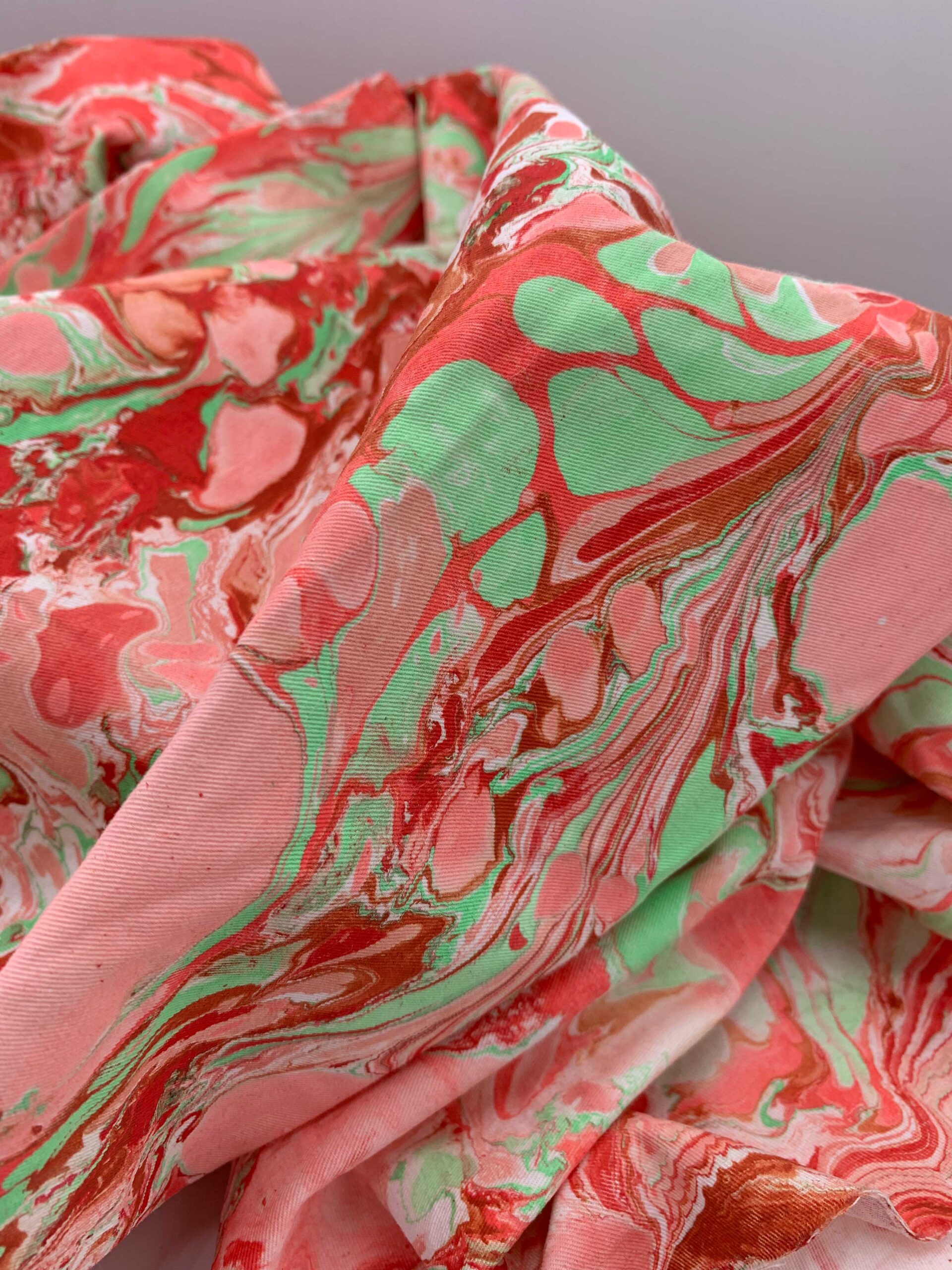
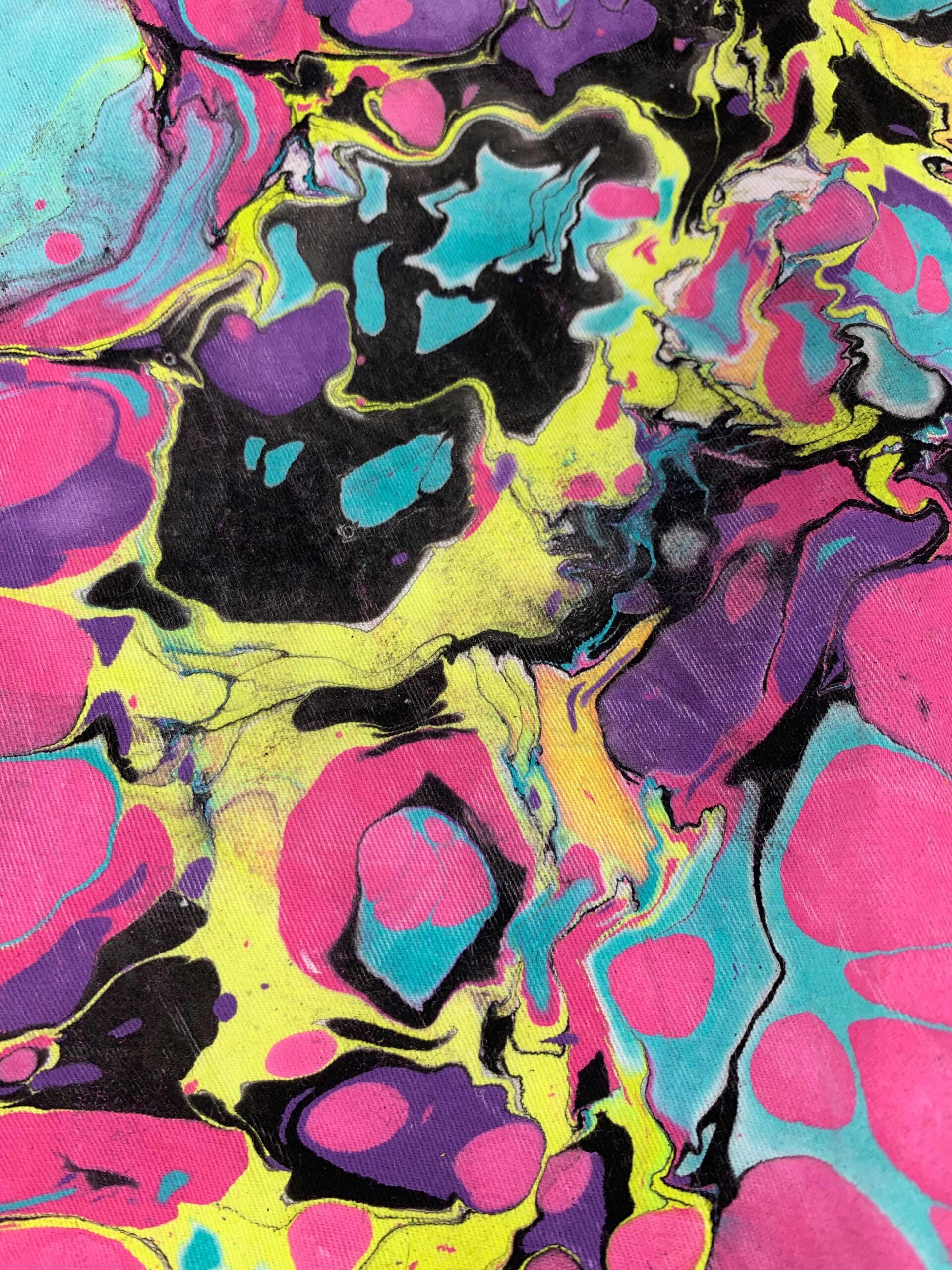
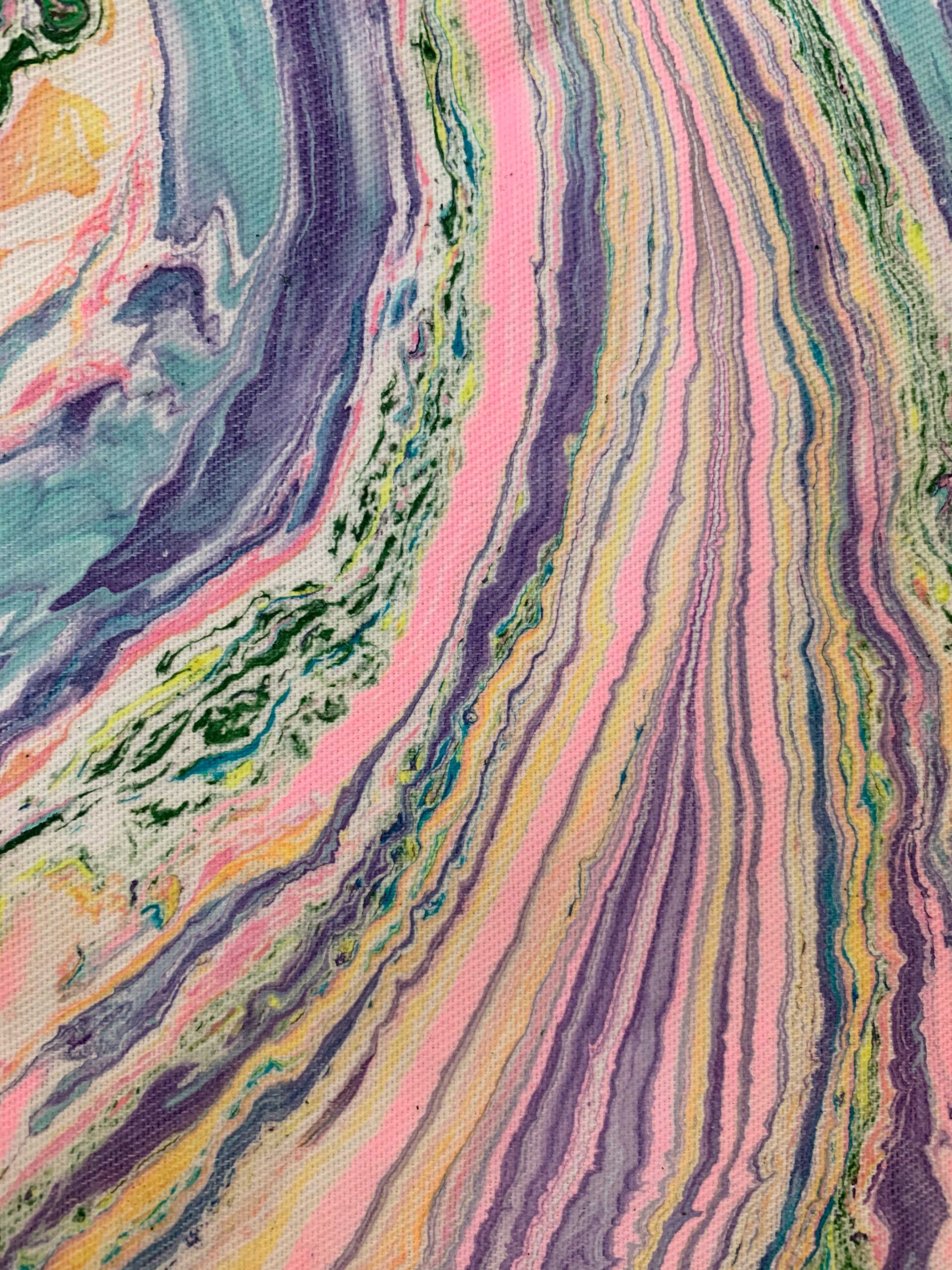
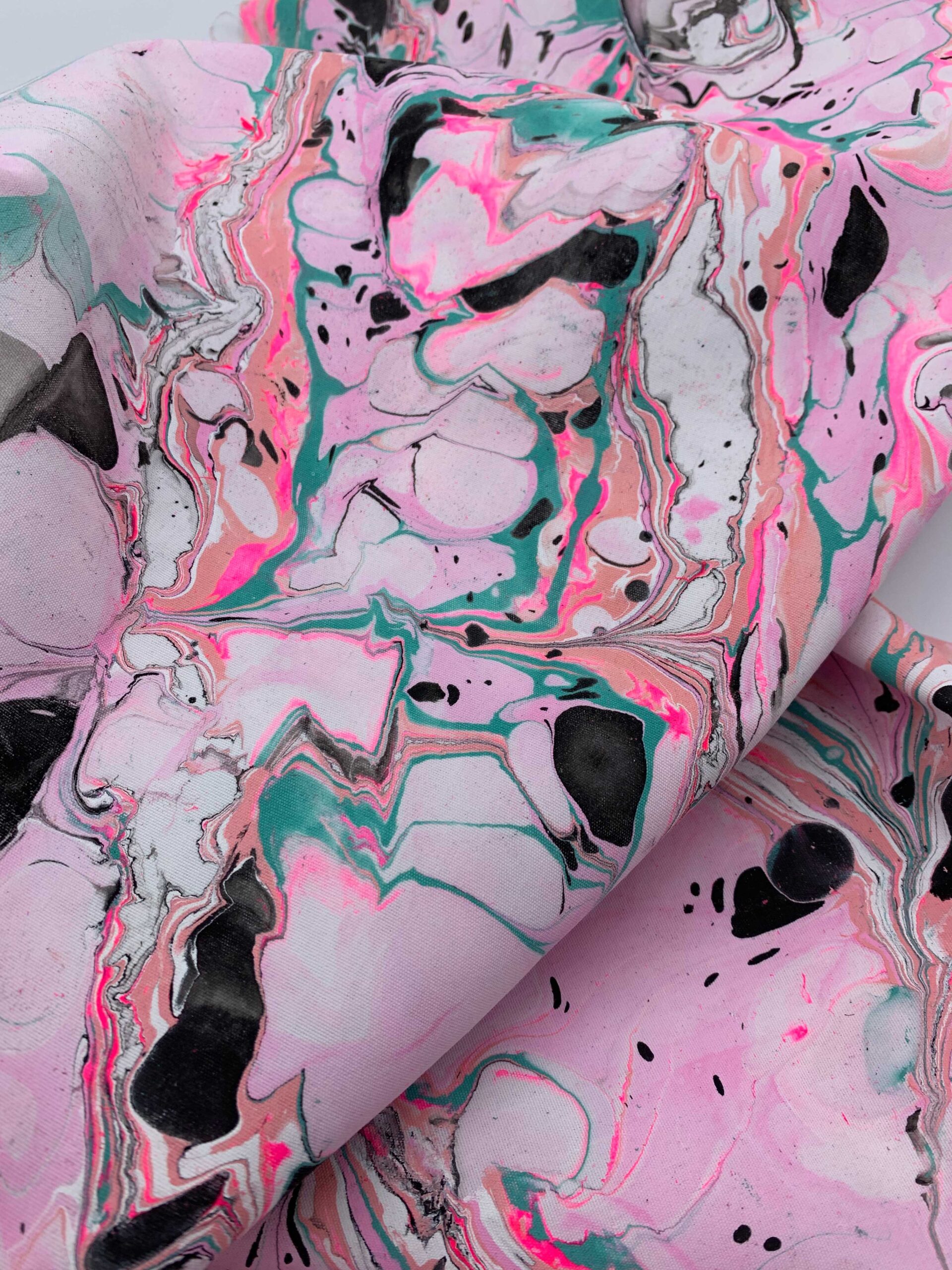
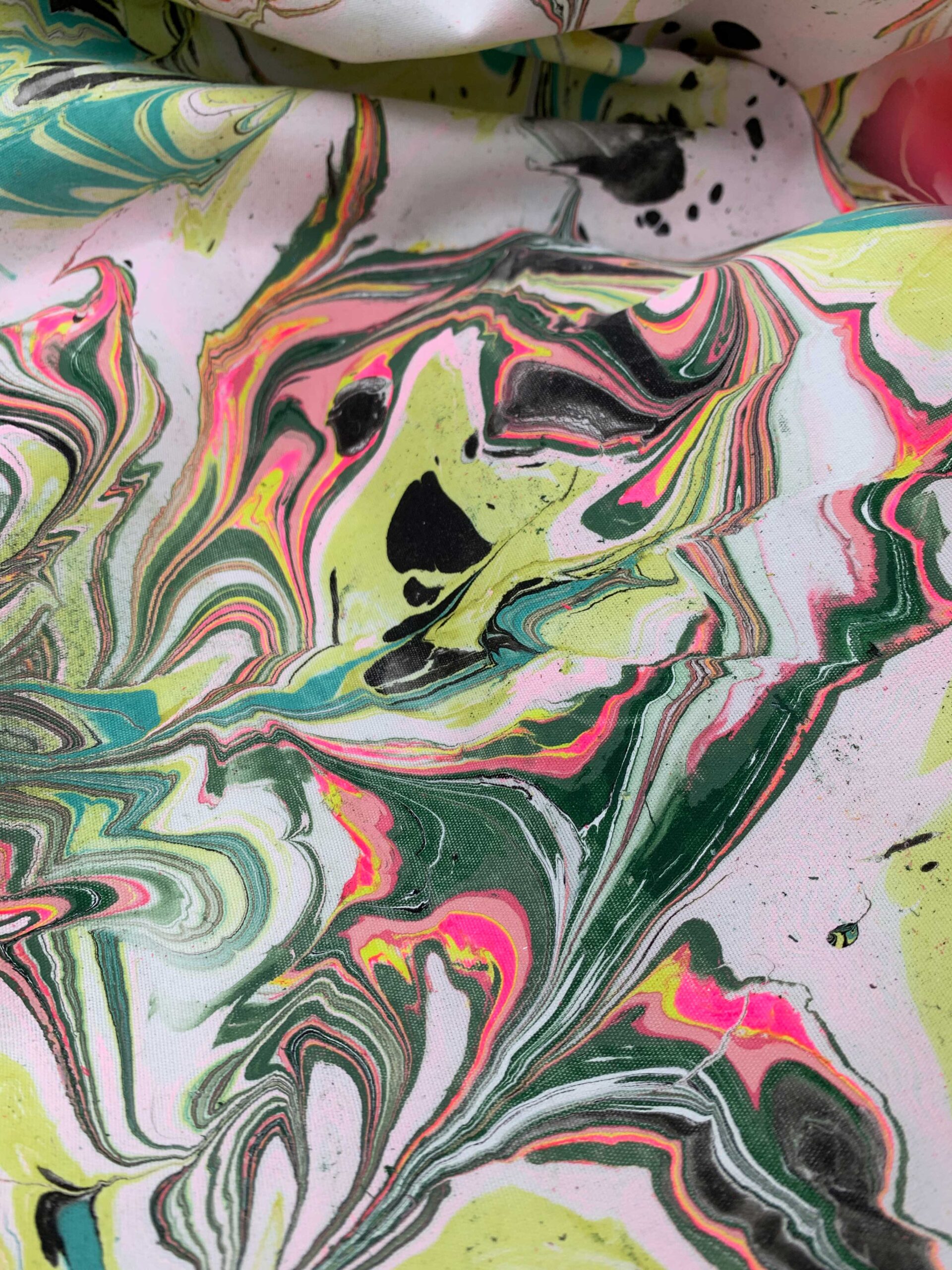
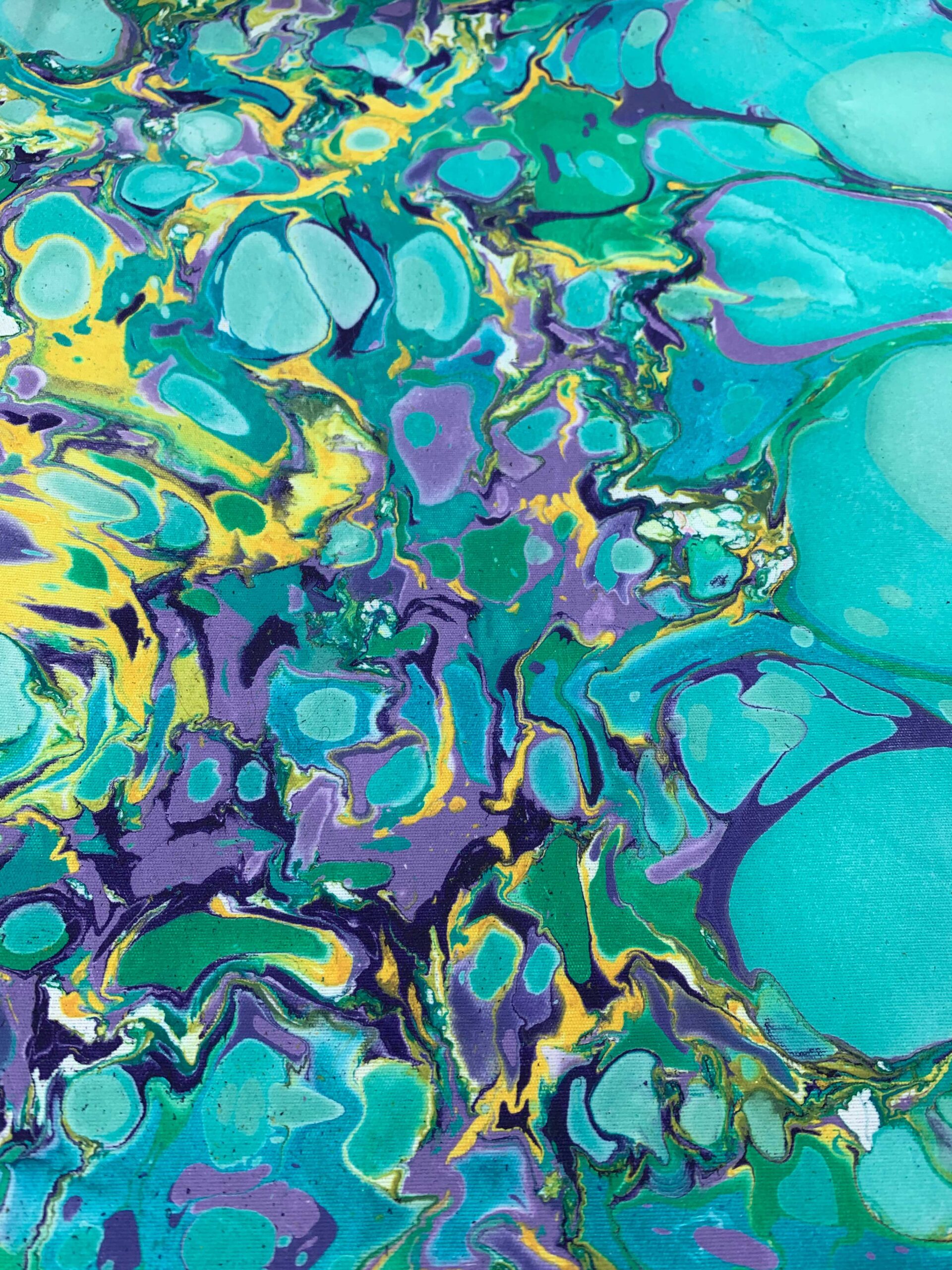
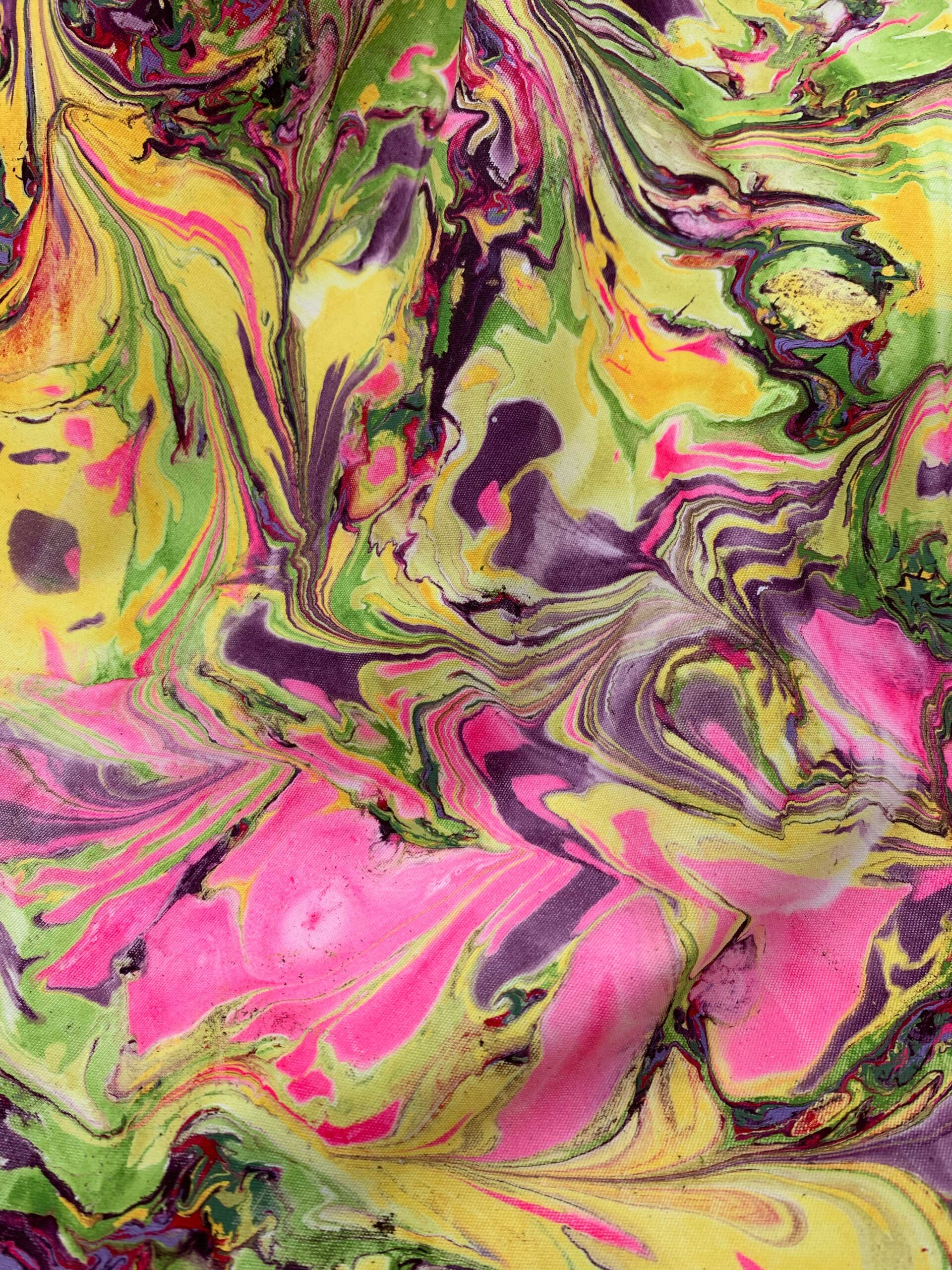
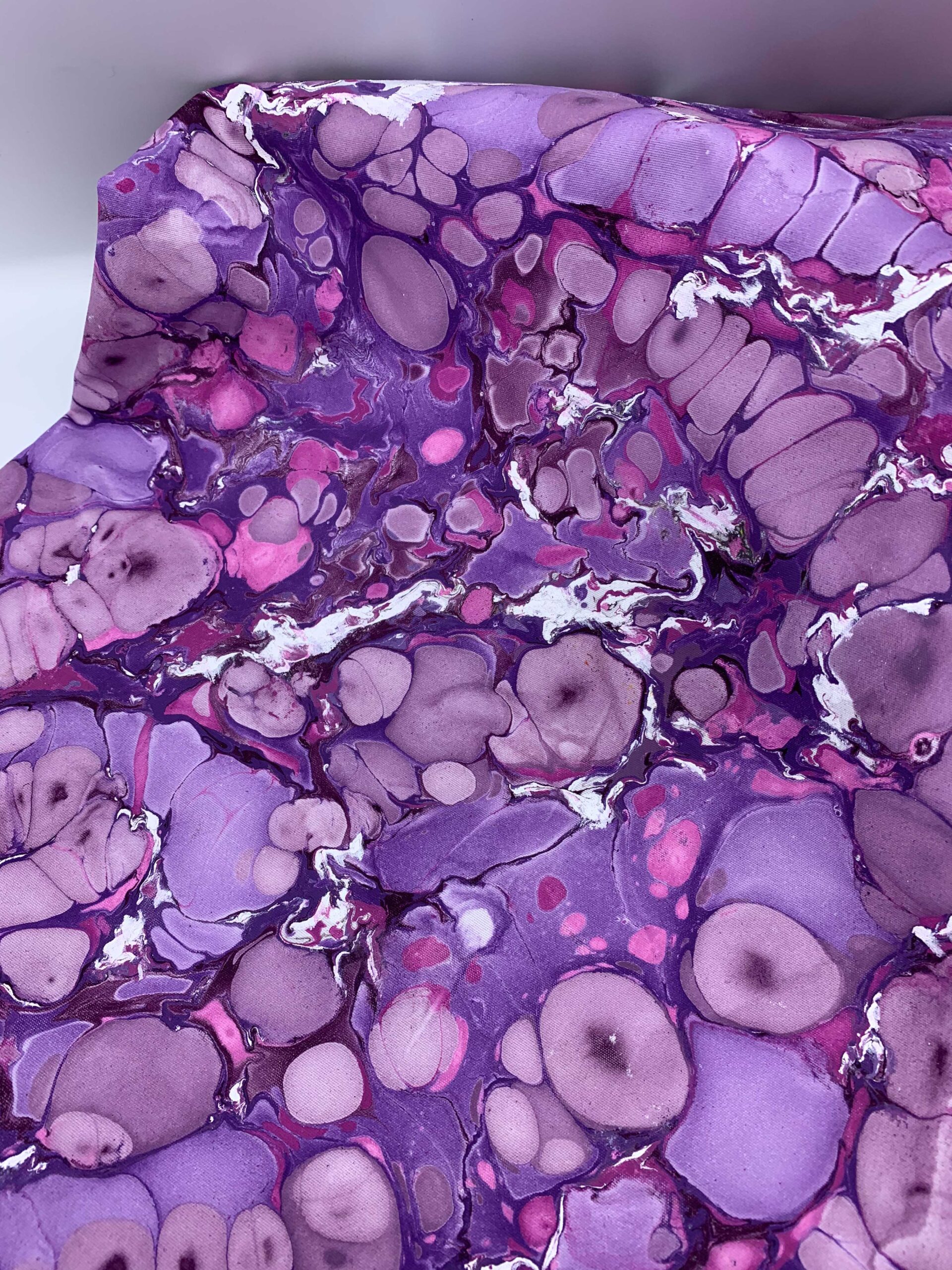
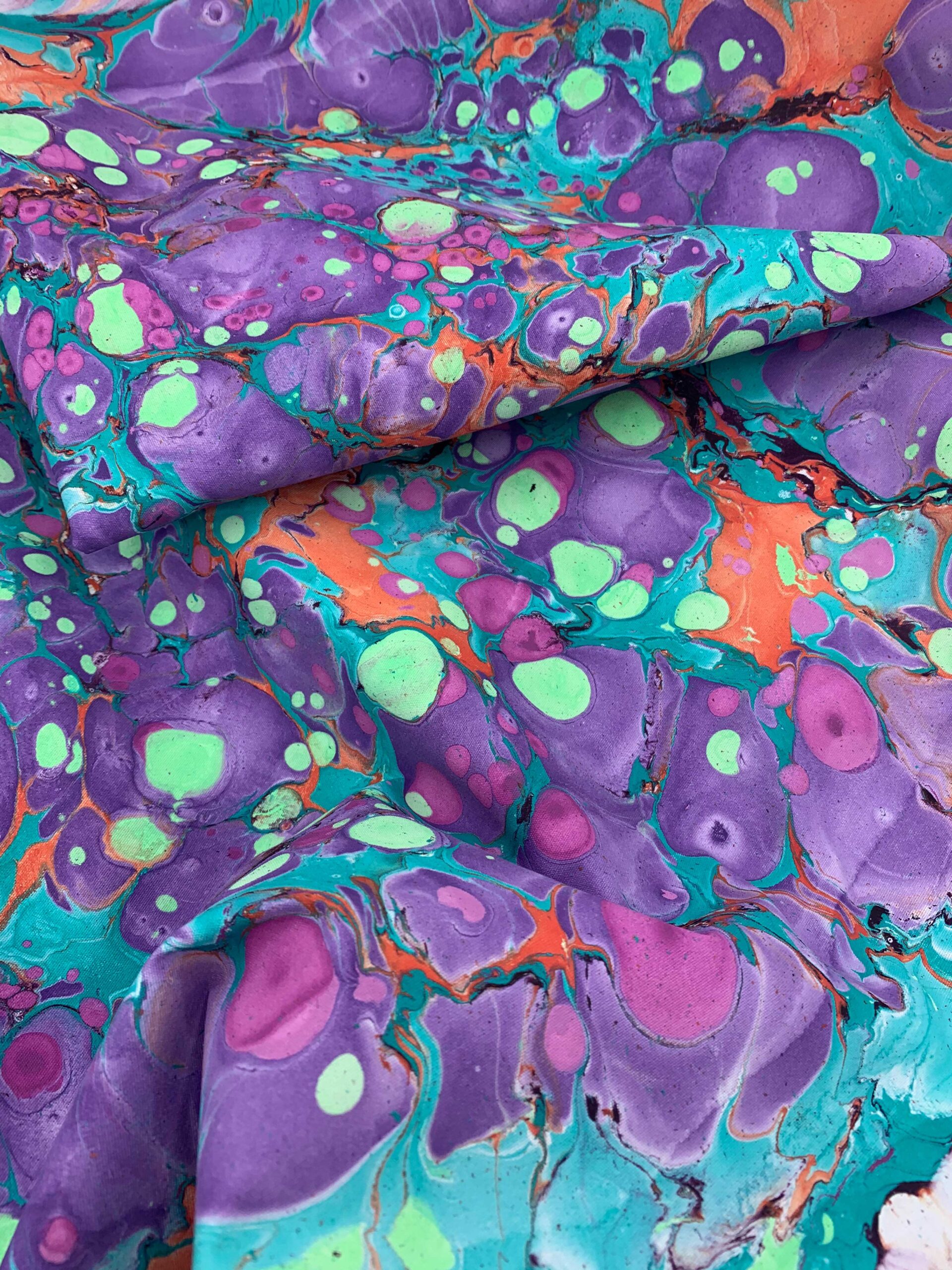
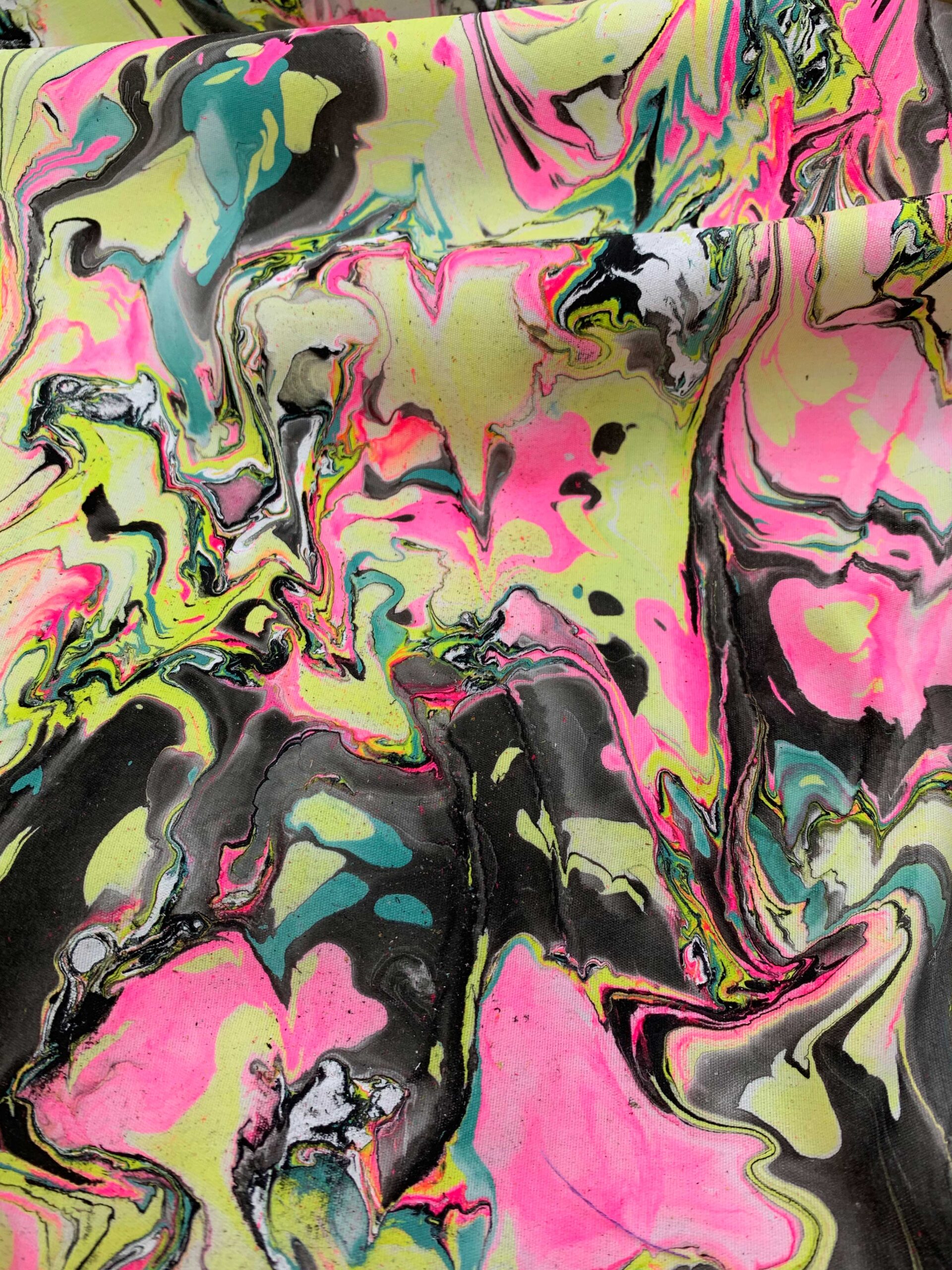
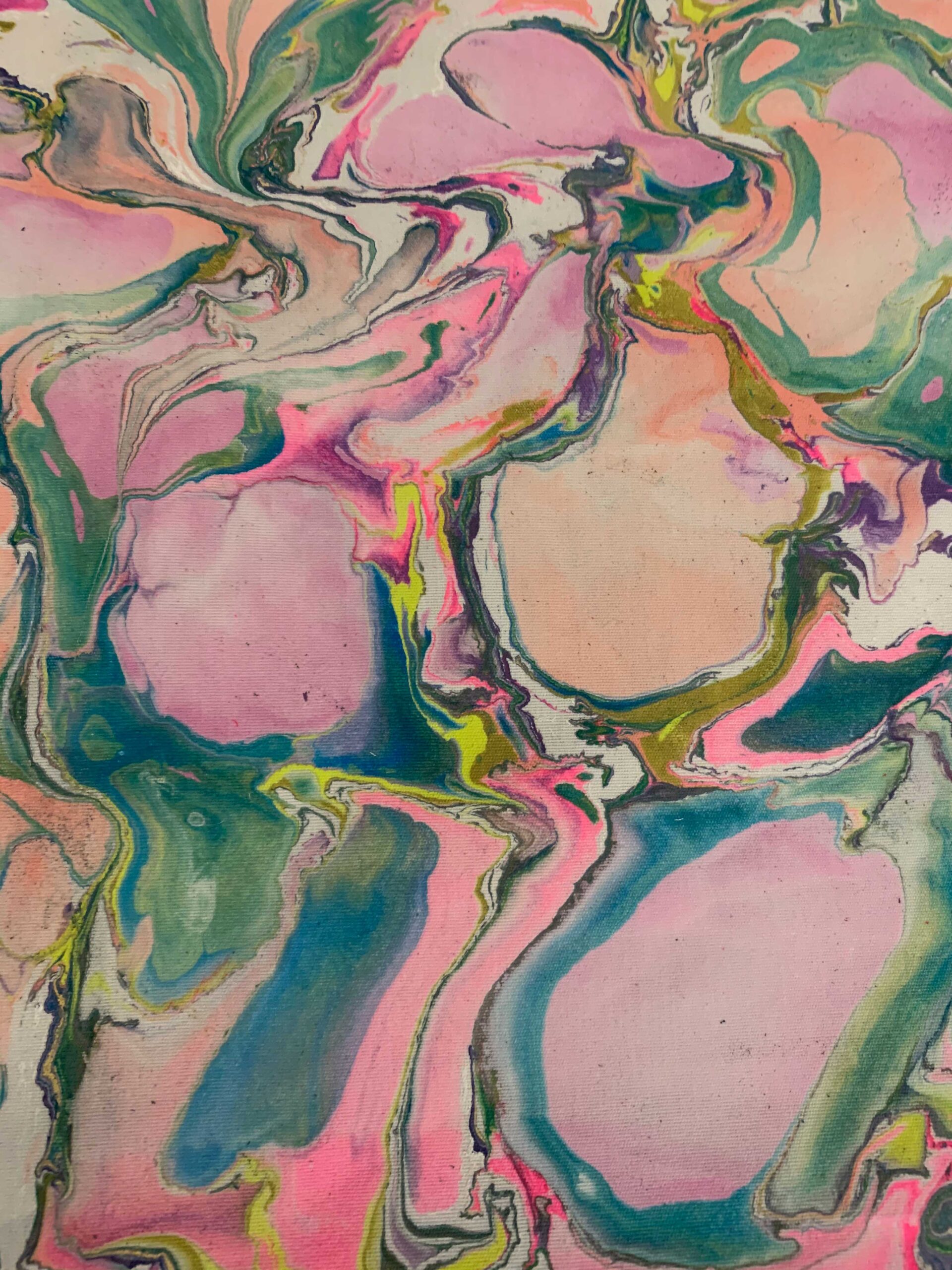
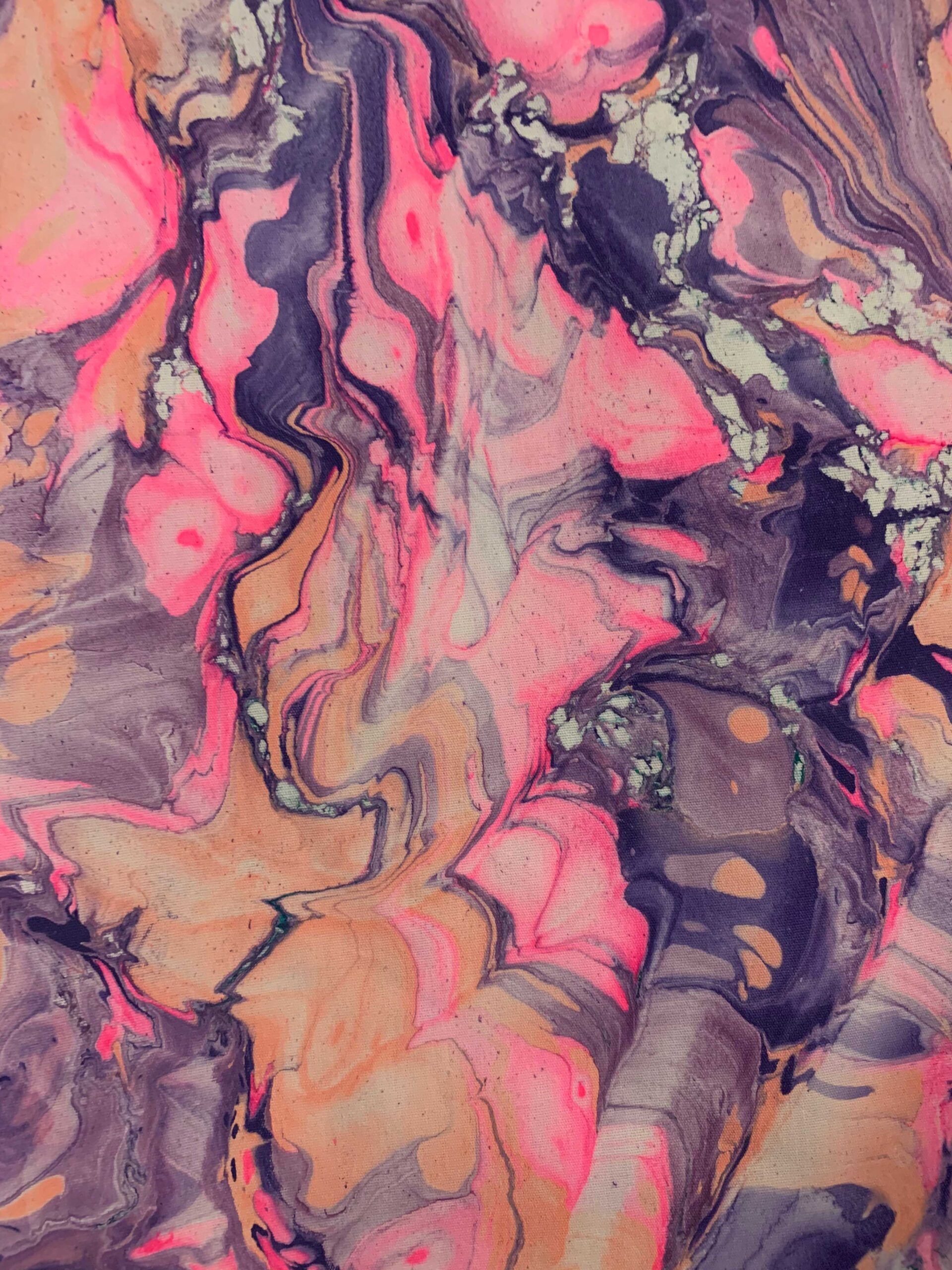
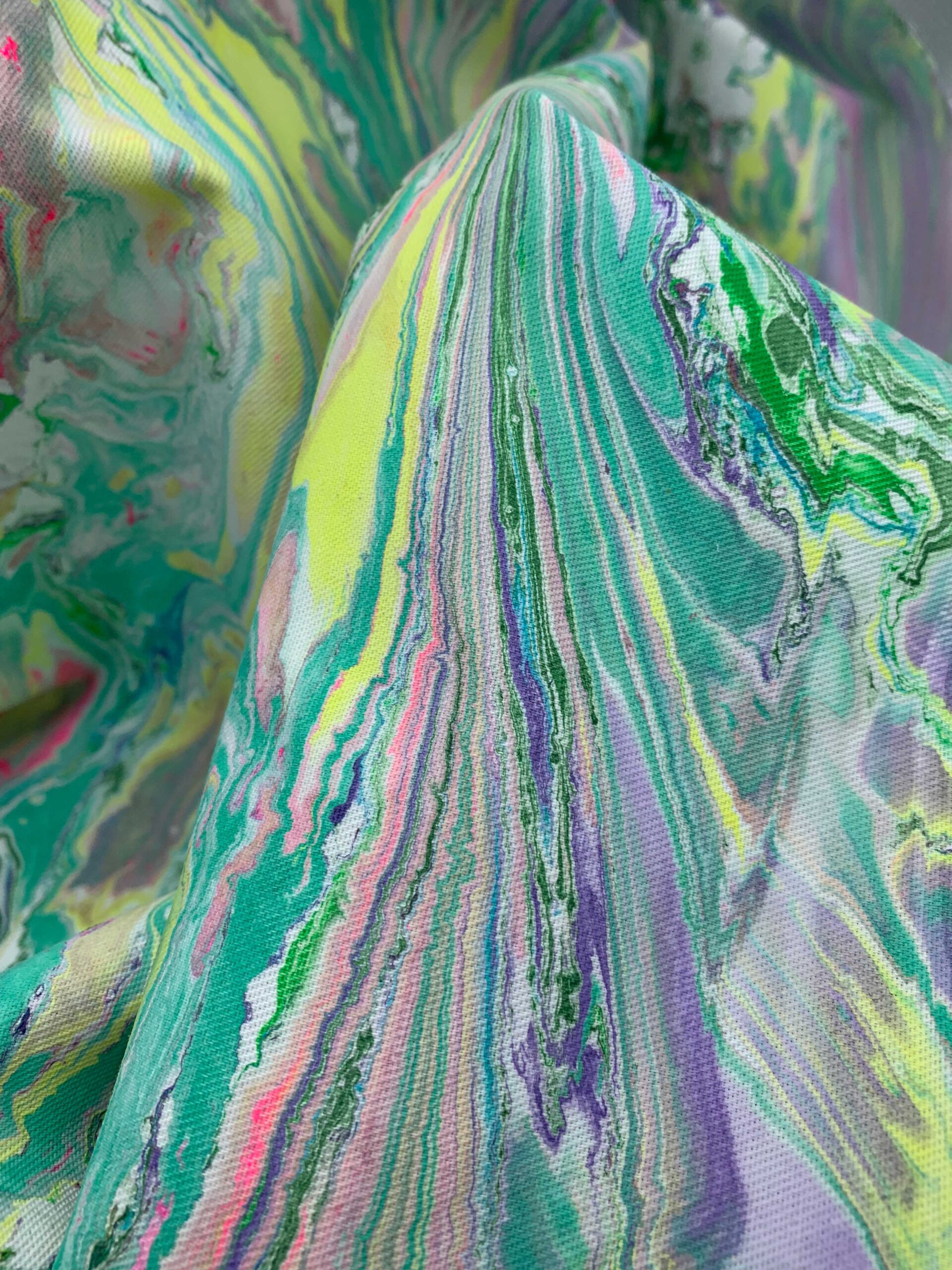
Unlike printed textiles that repeat across a bolt, water marbled fabric exists as a singular composition. It behaves less like pattern and more like a painting held in motion.
Pigment expands, resists, fractures and merges on the water’s surface, creating depth and tension within the composition. These interactions produce subtle shifts and intersections that give the textile a sense of movement, even at rest.
What emerges is not a fixed design, but a living surface formed through fluid dynamics rather than mechanical repetition carrying both precision and unpredictability in equal measure.
From Textile to Finished Pieces
Once transferred, each textile becomes a complete and unrepeatable work. There is no versioning, no duplication, only the original moment, preserved.
These surfaces can remain as panels or be transformed into finished pieces, from statement pillows to custom installations. In either form, the integrity of the composition remains intact, with each cut and placement considered in relation to the movement within the textile.
The intention is not to impose function onto the material, but to extend its presence into space, allowing the textile to live within interiors while retaining the energy of how it was created.
Explore the Work
Explore the Textile Archive, a growing body of one-of-a-kind surfaces, each created through a single, unrepeatable moment in water.
FAQs
What fabrics can be water marbled?
Marbling can be done on a variety of natural and synthetic fabrics depending on the intended application. Different materials absorb pigment in unique ways, affecting texture, saturation and overall visual outcome.
Fabric selection is an important part of the design process and can be guided based on the needs of the final piece.
Is water marbling permanent?
Yes, when properly set, water marbling is permanent. The pigments used in fabric marbling are designed to bond with the fibers during the transfer and curing process. Once the textile is heat set and stabilized, the color becomes part of the fabric rather than sitting on the surface.
Unlike surface prints that can sit on top of the material, marbling integrates with the textile itself, allowing the pattern to remain intact over time with proper care.
How durable are marbled fabrics?
Marbled fabrics are highly durable when created and finished correctly. The longevity depends on the base fabric, the pigments used and the setting process.
In studio practice, textiles are rinsed, cured and heat set to ensure colorfastness. When cared for appropriately, marbled fabrics can be used in functional applications such as pillows, bags, and soft furnishings while maintaining their vibrancy.
As with any specialty textile, gentle care is recommended to preserve both color and structure over time.
Can I request custom colors or specific palettes?
Absolutely.
Custom marbling can be developed around a specific color story or project palette. Because marbling is created by hand and guided in real time, the exact pattern cannot be replicated but the overall color direction, mood, and movement can be intentionally designed.
This allows for a high level of creative alignment while still preserving the one-of-a-kind nature of each piece.
Can marbled textiles be created for interior design projects?
Yes. Marbled textiles can be developed for a range of interior applications including pillows, upholstery accents, soft furnishings, and custom installations.
Each project is approached as a collaboration, taking into account scale, color palette, and the role the textile will play within the space.
Are larger quantities or batches available?
Small batch production is possible, though each piece will remain unique. When working within a collection or series, textiles can be created within a shared color palette or visual direction to ensure cohesion while maintaining individuality across pieces.
This approach is often ideal for designers looking for variation within a unified concept.
Can I commission a one-of-a-kind piece for a specific project?
Yes. One-of-a-kind textiles can be created specifically for a project for fashion, interiors or creative installations.
Each piece is developed through a collaborative process that considers color, scale and intended use, resulting in a textile that is both functional and expressive. Tell us about your project here