
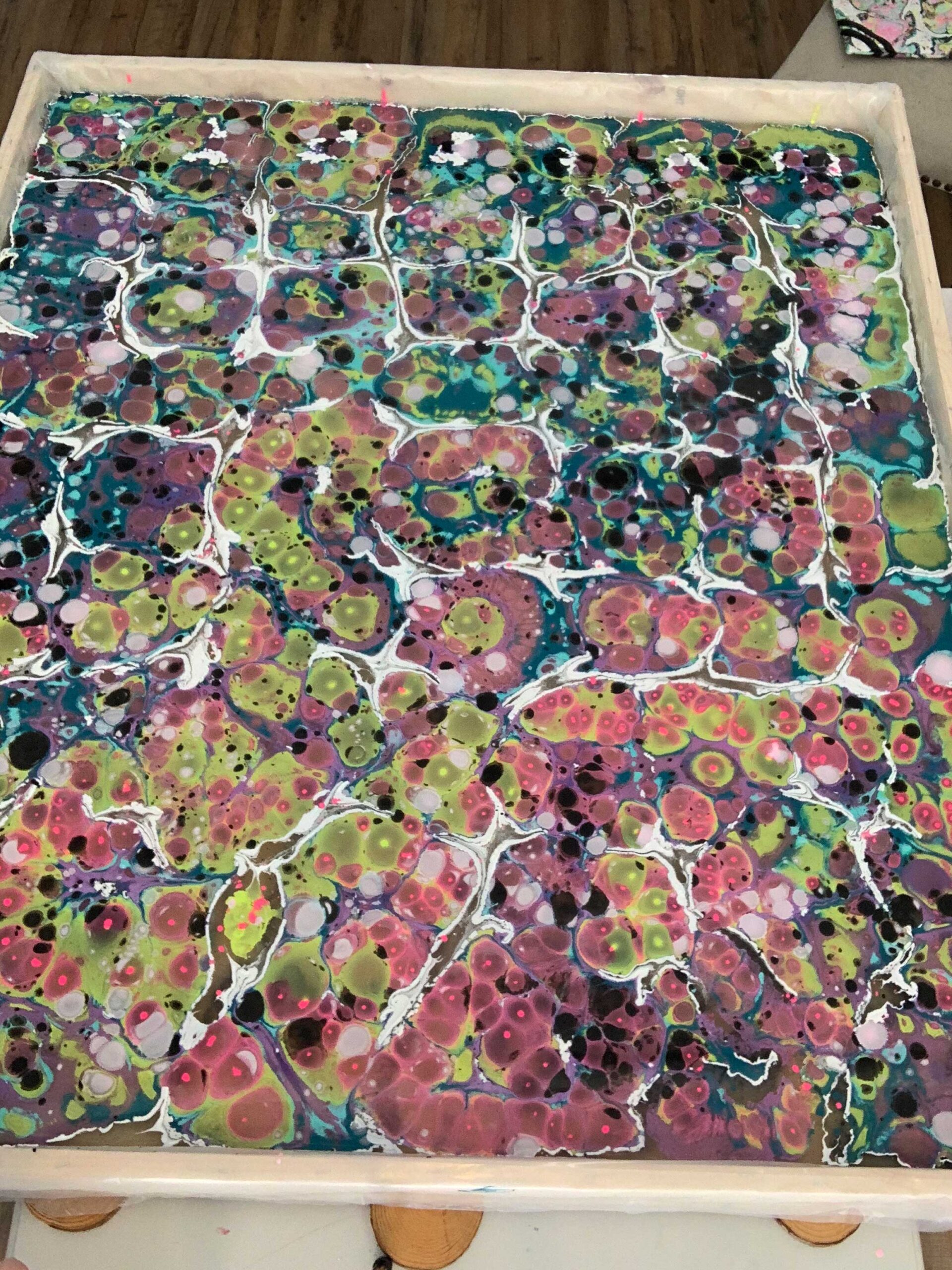
This study explores what happens when high saturation color is allowed to expand, collide, and self-organize without restraint.
Hot pink and acid green were introduced into the bath as dominant forces, while black was used more sparingly, not as a primary color, but as a disruptor. Instead of blending, it created tension points, forcing the surrounding color to separate, compress, and reform into cellular structures. What emerged was not a controlled pattern, but a reaction.
The Bath
The surface began with open space, allowing each color to fully expand before interacting. Pink spread quickly, forming soft edged pools. Acid green followed, pushing outward and creating pressure at the edges of each form.
Black entered last, breaking through areas of stability and creating pockets of resistance. These interruptions are what allowed the cells to form, each one defined by a boundary where expansion met constraint.
The moment before the fabric is laid down is where the pattern is alive.
Cell Formation & Pattern Behavior
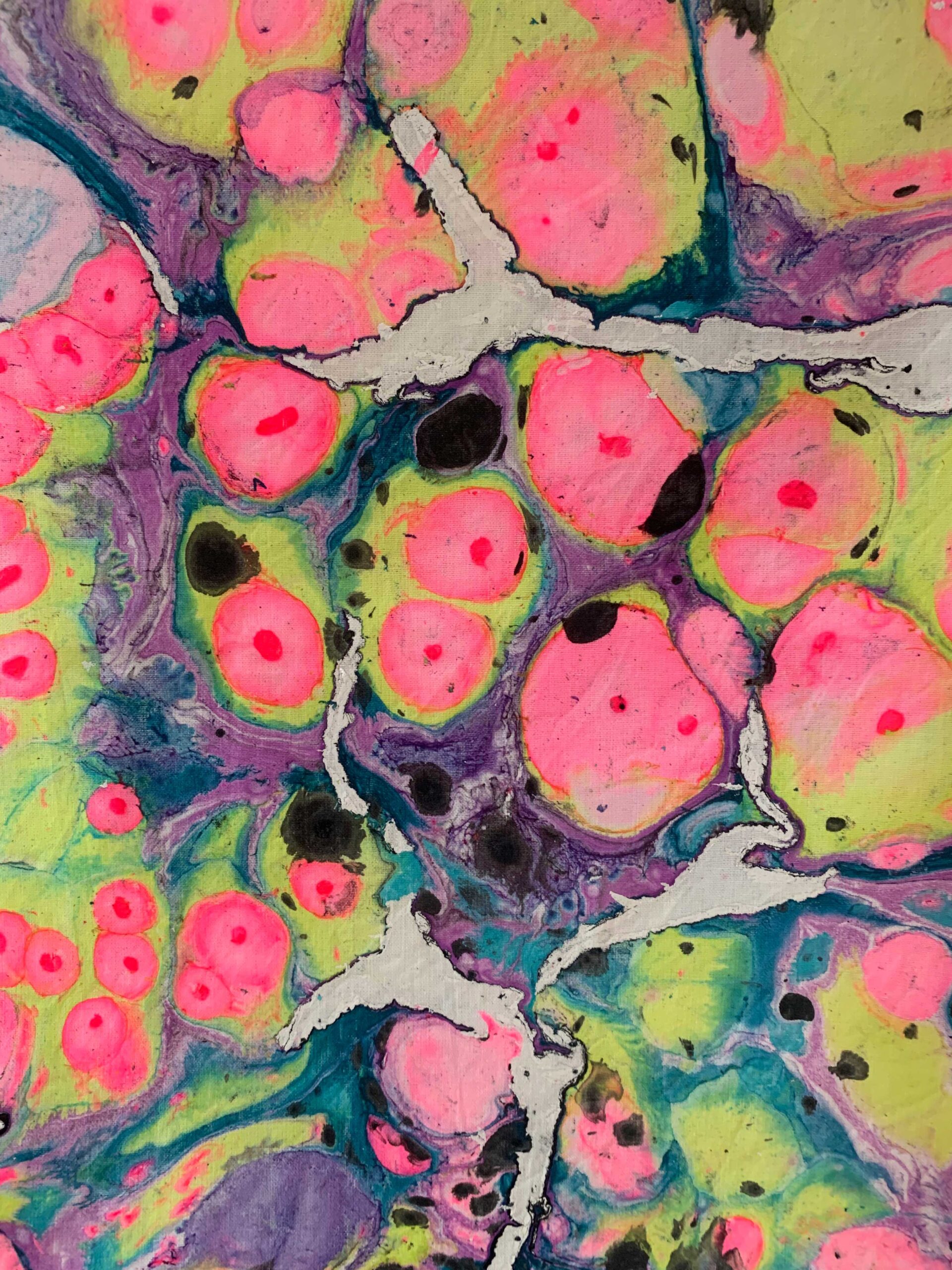
The cellular structures in this piece are the result of competing forces:
Areas of high saturation pushed outward until they met resistance.
Black created density points, causing surrounding color to fracture and reorganize. White space formed naturally as channels, separating clusters and giving each cell room to exist independently.
Some cells remain soft and open.
Others compress tightly, creating more defined edges and contrast.
This variation is what gives the piece its movement.
Nothing is static, even after it’s fixed.
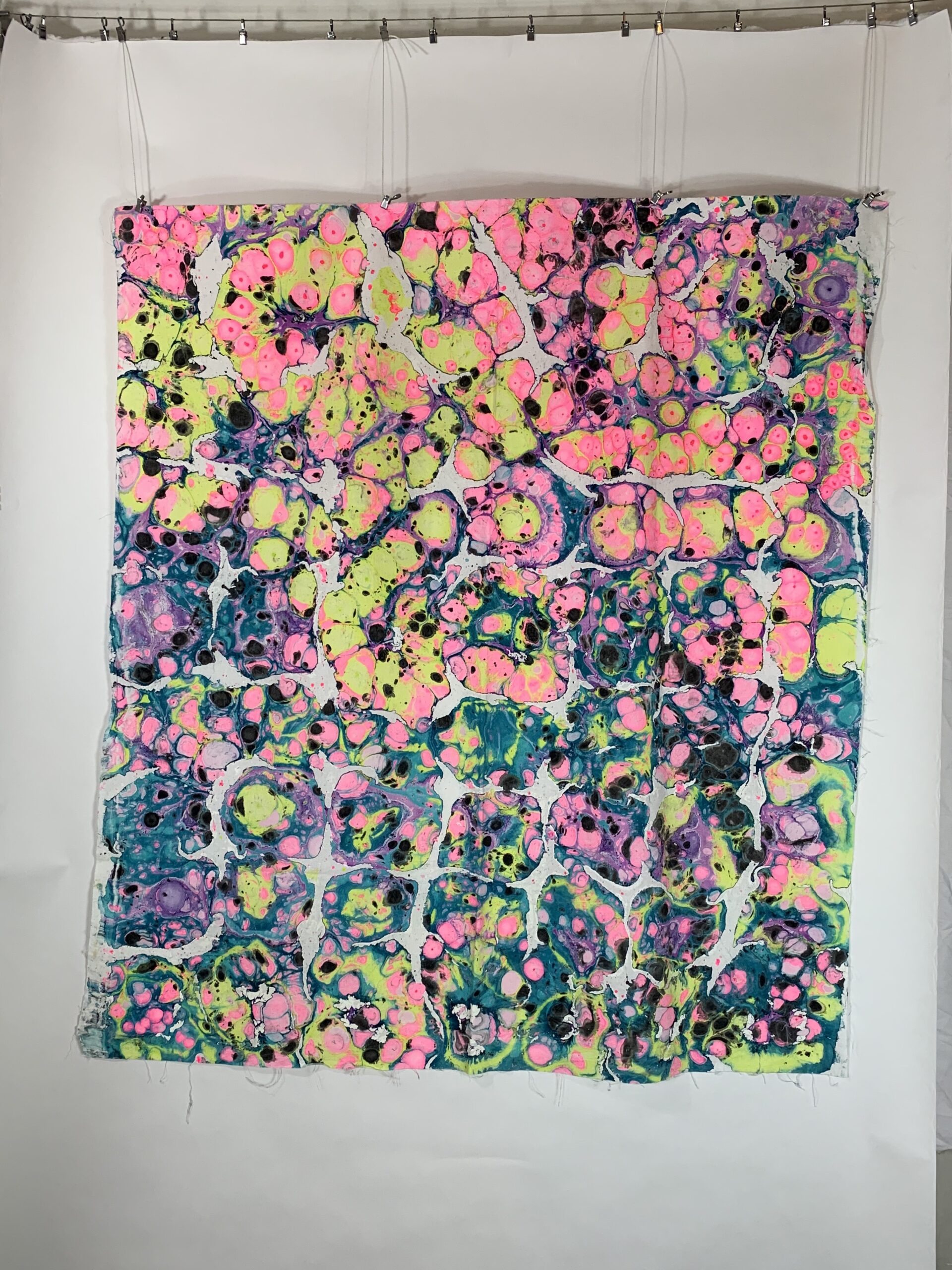
The Transfer
Once the fabric meets the surface, everything stops.
Movement becomes imprint.
What was fluid becomes fixed.
The relationships between color, expansion, compression, separation are captured exactly as they existed in that single moment.
There is no correction, no repetition. Only translation.
The Textile
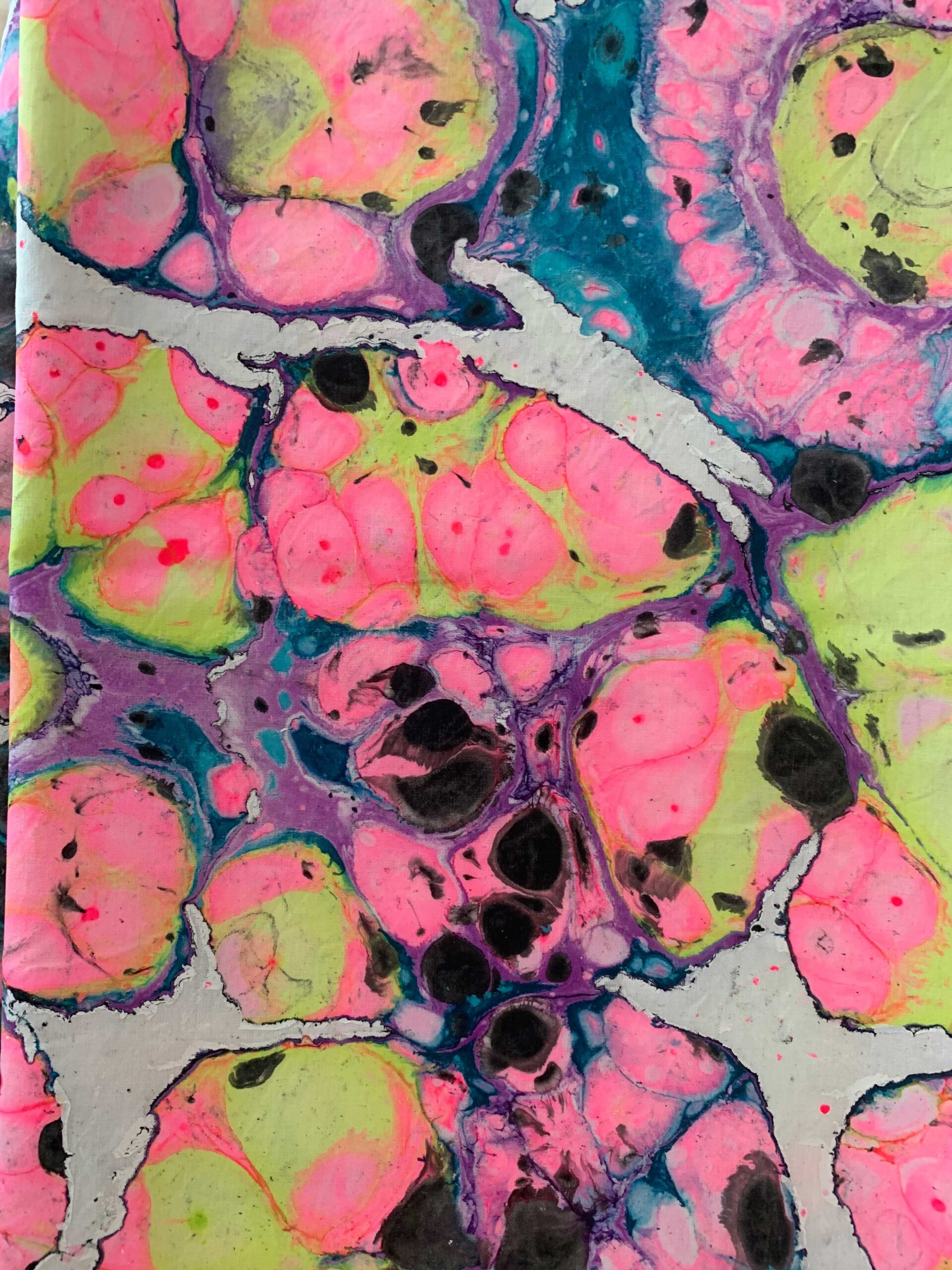
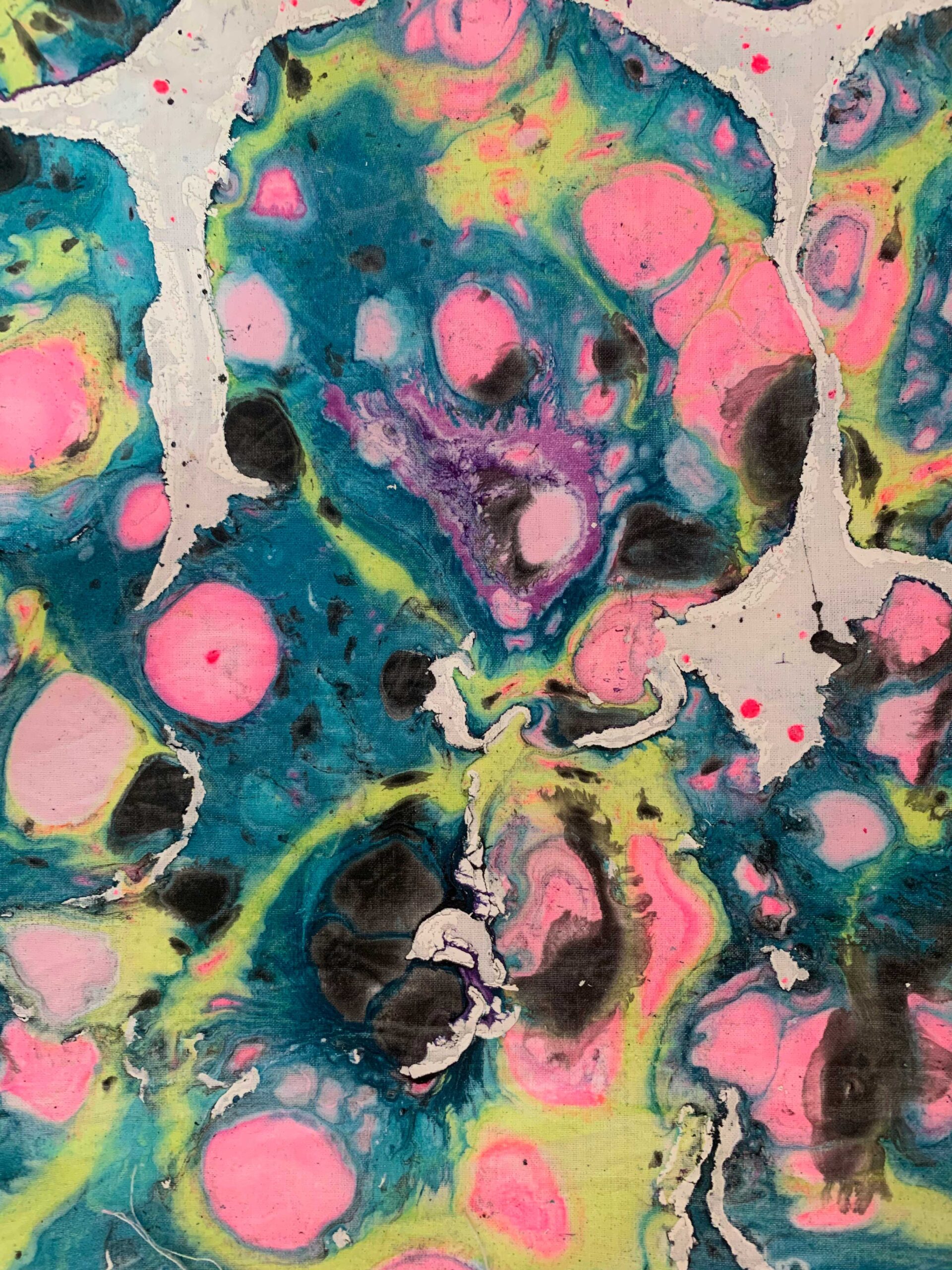
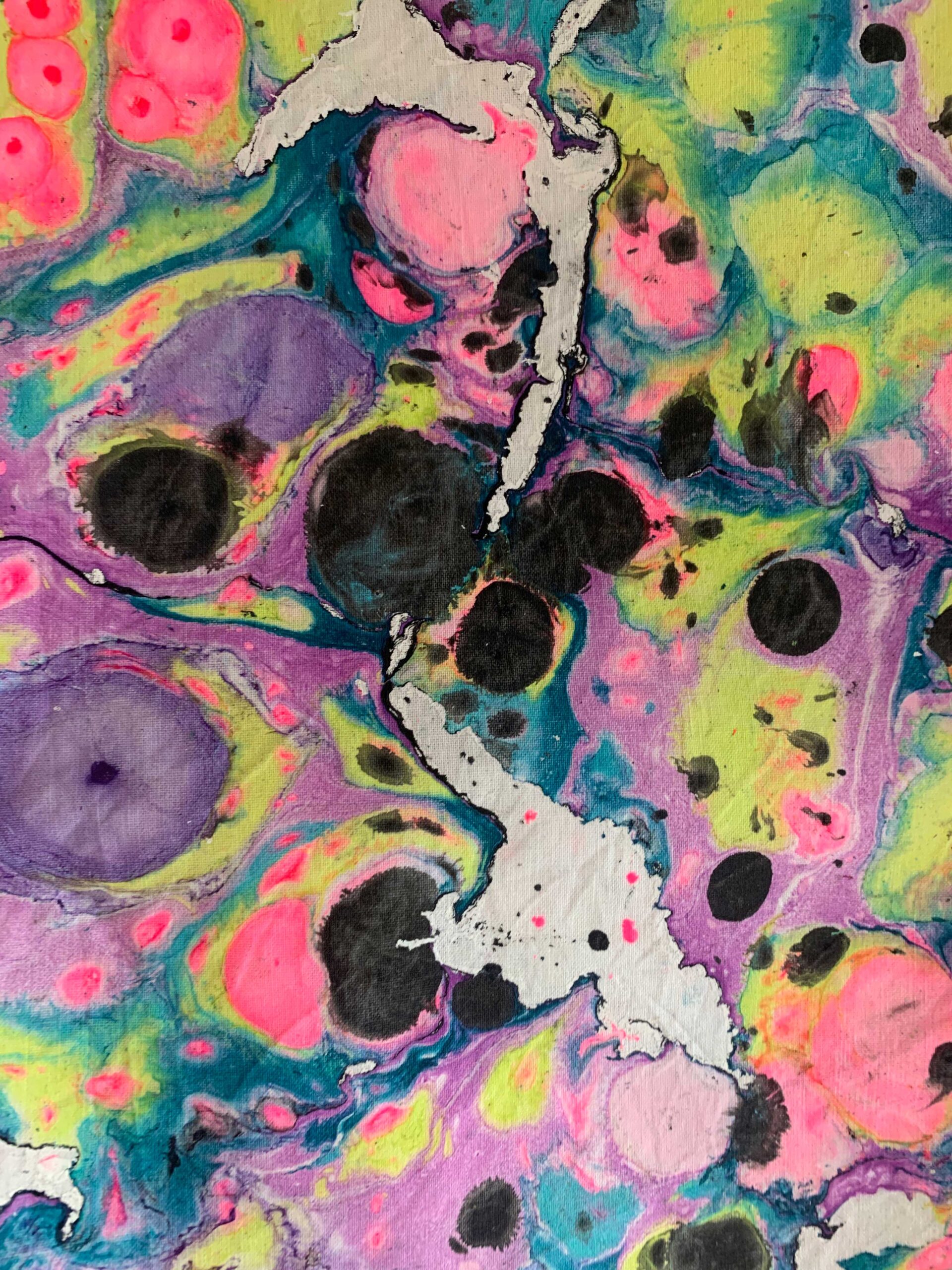
Up close, the surface reveals a layered interaction:
Soft gradients inside each cell
Sharp interruptions from black pigment
Thin halos where colors pushed against each other
Subtle texture from the fabric itself holding the pigment in place
What appears bold from a distance becomes intricate at scale.
One-Time Interaction
Each marbled textile is the result of a single interaction between color, surface, and moment. Once lifted from the bath, it cannot be recreated. This piece exists as a record of that exact exchange.
From Textile to Object
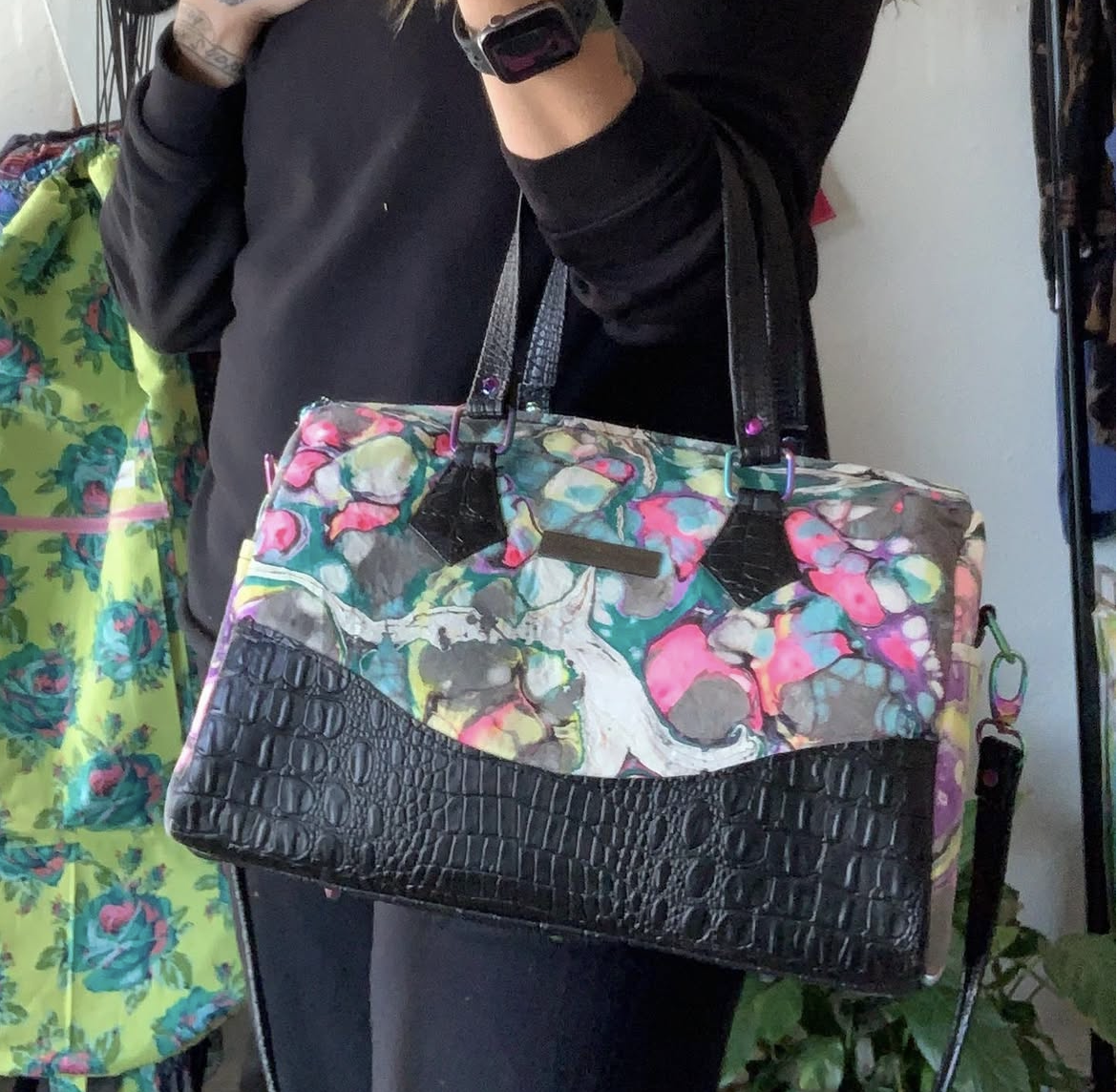
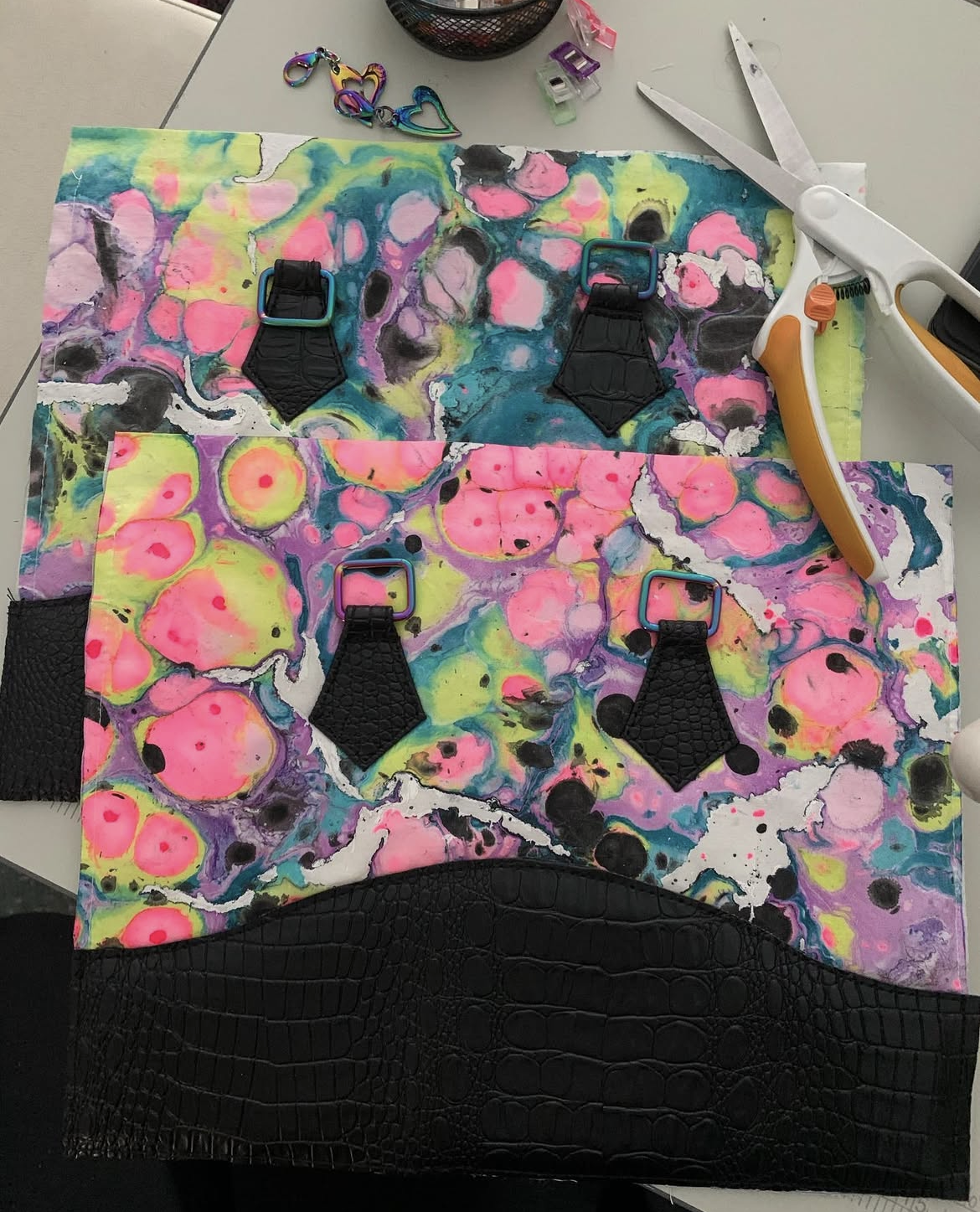
This panel was later cut and constructed into a bag, allowing the pattern to shift from flat composition into form.
Sections that read as abstract fields become focal points.
Edges and seams create new relationships within the print.
What was once a single surface becomes something dimensional — carried, used, experienced differently.
Watch the time lapse of turning this stunning fabric into a walking, one of one art piece.